
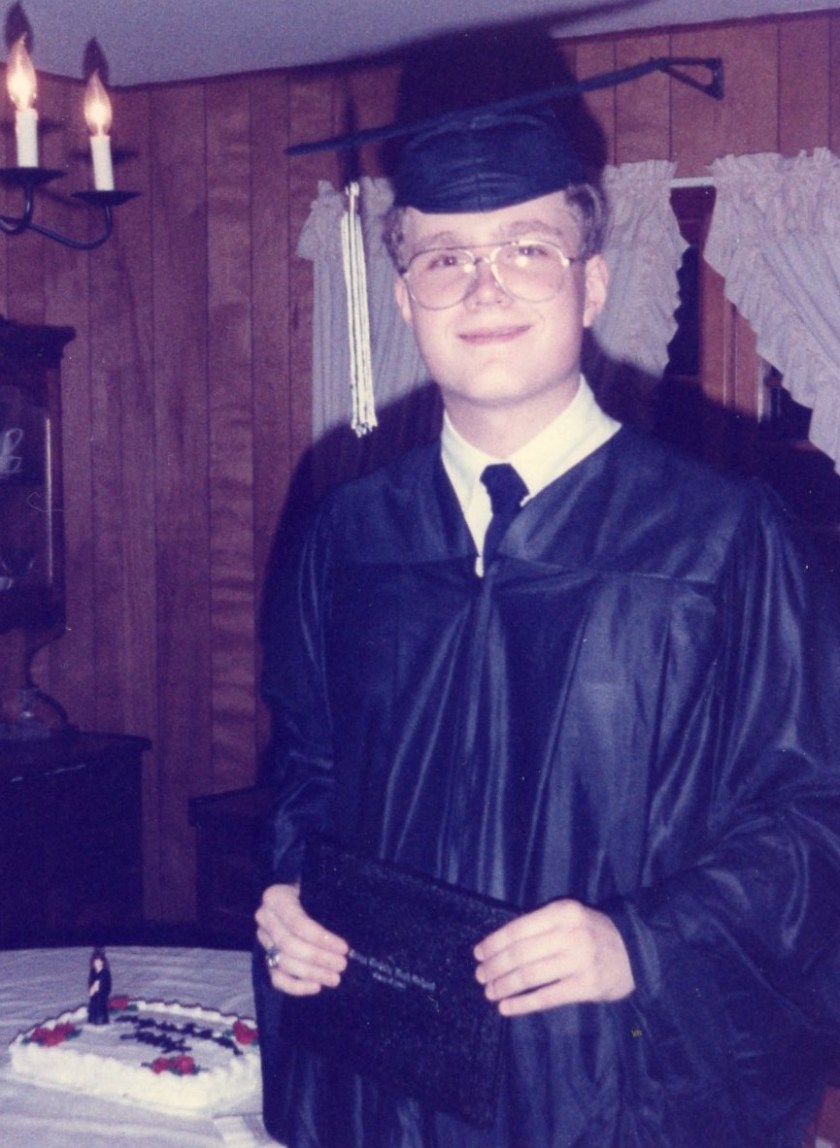
I graduated from high school in 1985. I don’t think that makes me “old” exactly, but I think it’s safe to say that I am no spring chicken and have witnessed a fair amount of change over the past (almost) half century since I entered the world that September evening as the 1967 “summer of love” was drawing to a close.
The recent news about the passing of music legend Prince certainly grabbed by attention. I always really liked Prince, but I didn’t necessarily call myself a raving fan of his in those days. In fact, at the time, my arrogant teenage refrain was that my generation’s music was kind of lame and that I had been born a couple of decades too late.
Around seventh grade, I discovered the Beatles and the Rolling Stones, and both of those groups managed to take my breath away. Then, as an angst-ridden high-school freshman, I bought a cassette of a Doors greatest hits anthology and fell under the spell of Jim Morrison for a year or so. Finally, around my junior year, the soundtrack to the The Big Chill made me think that Motown was the greatest musical treasure that had ever graced the earth, until I discovered the smooth sound of Sinatra and his Rat Pack a few years later.
So, I always seemed a bit underwhelmed by the music that people of my exact age range were supposed to be calling their own. Yet, I still owned quite a bit of it on vinyl, cassette, and–just shoot me–eight-track tape. So, I complained about 80’s pop and rock not being as good as the old stuff, but yet the mainstream music superstars like Michael Jackson and Prince were still a huge presence in my life and in the wider culture around me; there was absolutely no getting around them.
Music was a huge part of the mix, but it applied to all realms of entertainment including television and movies. There were larger than life celebrity icons that reigned supreme, and it seemed that everyone–or almost everyone–was watching and listening.
My other half is just three years younger than me, but he never lets me forget that small but pivotal divide. He made a mid-life career change and is getting ready to graduate from nursing school in a matter of days. On the very afternoon that the untimely demise of Prince had overtaken both of our Facebook news feeds, we had a relevant and insightful conversation.
I am so proud of him, but back to the matter at hand, he and a group of fellow students were putting together a health-fair project to try to encourage organ donation. Based on his earlier training and experience in education, he thought it would be fun to do a celebrity photo game in the display. Fun idea, right? Well, it went okay, but it wasn’t as nifty as it would have been in 1985 or perhaps even in 1995, It seems that artists and entertainers today are more tied to highly segmented “niche” identities of age, rage, and socioeconomic status. Where have the universal celebrities gone?
I work in marketing, so I should have known the answer to my own question right off the bat; it seems the powers that be are now trying to tailor the product to just the right slice of the pie at just the right time and place. Yet, it’s not just a matter of the selling strategies in play; the way we consume media has shifted so radically in such a short period of time.
We did indeed have some computers in my rural high school during the eighties. Yet, they served a rather limited range of purposes, all pretty much related to learning about technology as a potential career, which as best I remember entailed entering lines of BASIC code that would make computers answer formulas. There were a few games like Oregon Trail being developed that kinda sorta had entertainment elements, but I don’t think even they had hit the big time then. Computers were something serious and intimidating, and the idea of using them to download music or movies would have seemed like science fiction.
We had the aforementioned formats of physical music, and cassettes were still the biggest kid on the block. The big deal as far as personal listening experience was the Sony Walkman, and I vividly remember getting mine as a Christmas present, along with a tape of Billy Joel’s amazing Nylon Curtain album. I think I did permanent damage to my hearing that holiday season, but it was great. Yet, music was still a physical commodity, and we went to buy it in places called record stores. (And we rode our dinosaurs to get there, LOL.)
We also had radio, and there was a finite array of choices on the dial. Breadth was often the name of the game. Granted, the major urban markets were starting to specialize a bit more into hard or soft rock, but you could still find plenty of radio stations that were trying to present a bit of everything for everyone. So, even old timers who weren’t all that enamored of modern music were still probably exposed to the biggest pop and rock tunes of the era through osmosis.
My little hometown in Western Kentucky first got cable television around 1980, though it didn’t make it to our street until around 1983. In the early days of cable, there were a few major game-changers like MTV and HBO, but it’s important to keep in mind that many people still didn’t have cable, and even when your household did, it was originally just a matter of going from three or four broadcast channels on the dial to thirteen or fourteen different cable networks from which to choose.
When Kristen was revealed as J.R.’s shooter on Dallas that November Friday night in 1980, we talked about it at school the next Monday. There was no worrying over being a “spoiler,” because even VCR’s were still a fairly exotic luxury item. We watched shows together when they aired, and if we had to miss them, we waited until Summer for reruns. There were certainly some irritating aspects of this limitation, but looking back, I think the rigidity of the whole experience helped build the connections we made.
When major music-centered motion pictures like Footloose and Purple Rain exploded on the scene, the songs and the catch phrases managed to permeate the culture, not just among those who went to see them in the theater. The tunes and the images were everywhere, and it wasn’t confined to someone’s particular “scene.”
Please be assured that I am not claiming that the content of my Gen X formative years was absolutely perfect and wonderful, and that the millennials only have crappy stuff from which to choose. Actually, there is probably as much good stuff now as there was then, maybe even more. Yet, somehow, in my mind, the paradox of all of these entertainment choices is that the singular power of any particular one of them seems diluted in today’s crowded waters.
When I ponder all of this, I realize that what I experienced in the era of big hair and black Trans Ams was maybe kind of special after all. And, let me be clear that you don’t have to watch Dynasty to have an attitude and that I have been blaring Prince songs on my ipod for the past week.
 Coloring Outside the Lines
Philip, this is really good, thought provoking!
LikeLike
Thanks Jamie!
LikeLike
As always, really enjoyed it! You are such a good writer. I am so proud of you!!!
LikeLike
As am I, Pat. It’s such a joy to read Philip’s writing!
LikeLike
I am blushing!
LikeLike
Thanks Mom!
LikeLike
Phillip, you are such a talented writer and I enjoyed reading this. Brought back high school days for me too !
LikeLike
Thanks Anne! Good to hear from you! I have been trying to grow as a writer, but I am prone to burnout. Yet, it seems that when I find topics that I can connect with my own life experience, it’s more fun for me.
LikeLike