
July 14th will mark a huge day in the literary world. Go Set a Watchman, the long-lost sequel/prequel to Harper Lee’s classic To Kill a Mockingbird makes its way to bookstores, libraries, and digital gadgets. This leaves a few more weeks of summer heat–or perhaps nicely chilled indoor air–for readers with an interest in Southern fiction to try to get their fix before the big release date.
I lack the time, energy, and expertise to offer a definitive list of all the great Southern writers. I know that there are many different visions of the South, and I can’t begin to paint everything with a broad brush. So, here are just a few novelists that tackle Southern life in their works. All three have certainly found an audience of readers, and their accomplishments are noteworthy. Yet, there is a part of me that feels compelled to become an evangelist pushing a broader audience toward their books.
Though he now lives on Key West Florida, Childress hails from Lee’s hometown of Monroeville, Alabama. He is probably best known for Crazy in Alabama, which became a 1999 film directed by Antonio Banderas and Melanie Griffith. The plot intertwines a woman’s bizarre journey to Hollywood after killing her abusive husband with a town’s painful struggle over the issue of race involving a public swimming pool.
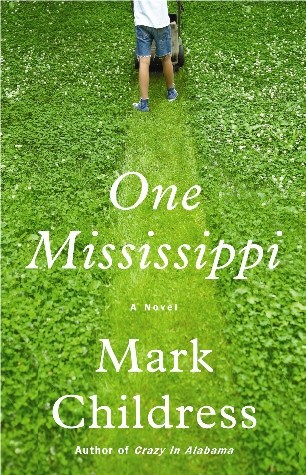
Crazy is probably a natural starting point for most readers, but if someone is looking for something a bit more edgy from Childress, I would highly recommend either Georgia Bottoms or One Mississippi. Georgia centers on a young woman (the book’s title character) who maintains a dual identity of respectable small-town citizen by day and discreet practitioner of the world’s oldest profession by night. A series of sordid developments involving both a hypocritical young minister and revelations from Georgia’s past unravels the delicate balance. Mississippi, set in the 1970’s, explores a powder-keg of issues ranging from racial and sexual identity to teen angst and violence. (I realize that I seem vague here; I just can’t begin to offer an adequate summary to a book with so many different threads that tie together so perfectly.)
Edgerton lives and teaches in Wilmington, North Carolina; he has won tremendous acclaim in highbrow Southern literary circles over the decades and often generates comparisons to Flannery O’Connor and Eudora Welty. Yet, I have always wished that he could develop a greater following among general readers in the mainstream. He has an understated style of storytelling, but he creates some memorably colorful characters.
I especially enjoy Edgerton’s Raney, which chronicles the often contentious early years of marriage between a down-to-earth young woman from a rural town steeped in evangelical religion and a college librarian, a man shaped by a childhood in the more worldly environment of the urban South. I also recommend Lunch at the Piccadilly, which details the misadventures of a group of lively nursing home residents seeking relief from their restrictive residence.
West grew up in the Gulf Coast region but eventually made her way to Middle Tennessee, where she now lives. As a result, she moves back and forth between these two very distinct areas in providing settings for her delightful novels. The literary territory of “magnolias of steel” females from south of the Mason-Dixon line certainly has inspired a host of highly successful authors over the years, but I think West’s gift for storytelling and her strong sense of place make her worthy of joining the biggest names in this realm of Southern fiction.
I would suggest starting with Crazy Ladies, which recounts the trials and tribulations of multiple generations of women from a Volunteer State family. The action spans a variety of eras and settings, as very distinct personalities and worldviews come into play. For a taste of Bayou cuisine and culture, I would single out She Flew the Coop: A Novel Concerning Life, Death, Sex and Recipes in Limoges, Louisiana, which lives up to its titillating title.
Stay cool and Happy Reading!
 Coloring Outside the Lines