
Taking a Glimpse in the Netflix Series Black Mirror

black-mirror

Netflix streaming can become pretty addictive. My other half and I enjoy vegging together to binge on the various options from time to time. Yet, there are a couple of complications. First, he recently undertook a mid-life career transition to become a registered nurse and now works 12-hour night shifts, so figuring out how to reconcile our two schedules can present a challenge. Secondly, our tastes—while in sync with regard to quite a bit of the good stuff that’s out there like Orange is the New Black–seem to diverge due to the fact that horror, fantasy, and science fiction really float his boat, while I generally find myself drawn to subject matter that seems more directly related to concrete life experiences or current social issues.

Don’t get me wrong, I consider myself highly creative and imaginative; it’s just that I possess the type of imagination that connects storytelling to the here and now, the things that I think could happen to me or to someone I know. There is a perfect genre at which we can meet in the middle, stories that classify as psychological thrillers/suspense.  Sometimes, there can even be science-fiction style plots that veer into this territory.

Rod Serling’s Twilight Zone stands as the perfect representation of such entertainment. No, neither of us is quite old enough to have watched the original series in prime time, but we were certainly immersed in the syndicated reruns that served as a staple for late-night television in the eighties. With his eerie demeanor and unrepentant on-air cigarette habit, creator/narrator Serling introduced us to an alien time and place that always managed to provoke questions about moral,  social, and political matters. Recently, based on both the pleas of my beloved and a “you might like this” marketing e-mail from Netflix (I won’t say which was more persuasive.), I watched two episodes of the newly released third season of Black Mirror. This series, begun in Great Britain but brought to North America thanks to the deep pockets of Netflix, offers a 21st Century take on the Twilight Zone experience, where the heavy-duty issues focus  specifically on technology.

Right off the bat, one liberating aspect of Black Mirror that serves our household especially well at the moment is that, like Twilight Zone, the program presents each episode in a completely self-contained fashion. So, no worries about viewing things sequentially or skipping ahead to reveal spoilers.  Somehow, this just seems simpler to deal with, and I hope to see this become a trend in television land, but I digress.

I have only seen two episodes so far, so I can’t claim to be a Black Mirror expert. So far, I am highly impressed with what I see. Yet, I am not a television critic, and the purpose of my blog doesn’t really directly relate to rating or reviewing programs. Rather, my sampling of Black Mirror has prompted me to do a great deal of thinking even to the point of overcoming writer’s block and posting this blog entry.

As mentioned in previous blog entries, I work in the field of marketing technology. Yet,  I am just one year shy of the half-century mark, so as a Gen X member, I feel that I stand at a crossroads where I am young enough to be a player in the game but old enough to detach myself a bit. As I have said before, if the digital age ended tomorrow through some apocalyptic catastrophe, I think I would be okay. I spend a fair amount of time weighing the various pros and cons and hoping to reconcile it all. Therefore, the Black Mirror plots–so far at least–seem like crack cocaine for someone like me.

The first episode I watched centered on an alternative future society where all residents possess special microchip recorders surgically wired to their eyes and brain to record every moment of each day. Not surprisingly, the device proves itself a two-edged sword. Friends and family members replay their shining achievements to earn bragging rights and also offer feedback that may not always prove constructive. Of course, sex and relationships,  get rather complicated as well, not exactly an original idea for fans of  the film Eternal Sunshine of the Spotless Mind but compelling nonetheless.

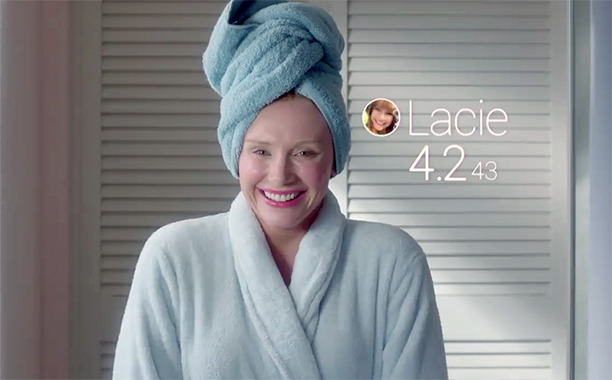
The next episode I got to see really hooked me in though. In this fictional universe that seems eerily close to the new reality, each citizen possesses an account tied to mobile and social technology where others continuously rate them on scores of one to five. Friends, colleagues, strangers on the sidewalk and in a busy airport concourse can vote up or down based on social encounters big and small or all sorts of prejudices. The scores have impacts on where someone can live, work, or travel. It’s a two-way street in that both sides of every encounter possess the power to rate one another, not unlike the real-life customer rating dynamic of the ride-sharing service Uber recently explored by Time columnist Joel Stein in an enlightening piece.

So, I think I am probably going to like Black Mirror. It’s certainly entertaining television, but more importantly, I think this line of questioning really clicks for me. I don’t think it’s a matter of saying that our ever-smarter gadgets are an evil force in their very essence. Yet, I think it’s just a matter of knowing when to step back and develop some perspective and maybe dial it down a notch. There are so many facets of how this struggle can take shape. I may explore them in greater depth as part of future posts, but in the meantime, if you have a Netflix streaming subscription and you like pondering this kind of stuff, you should give Black Mirror a try.
Thoughts on Stonewall and Orlando From a Moderate Gay Guy

Stonewall Inn
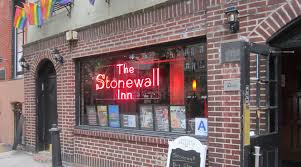
Sometimes developments just seem too overwhelming for me to process all at once. Today marks the first anniversary of the momentous Supreme Court decision granting marriage equality to same-sex couples. And, in a related development, July 5th will mark my own first wedding anniversary.  President Obama also recently announced that New York’s Stonewall Inn will be designated as a historic monument for its role in the struggle for gay rights. Yet, just two weeks ago, a terrorist–perhaps motivated by both a militant strand of Islam AND internalized self-loathing homophobia– murdered 49 people in a Orlando gay nightclub.

As I have acknowledged in previous posts related to gay issues, I am open about who I am in all facets of my life. I am not necessarily a parade marcher per se, though I understand the value of parades and have logged my time working at Pride booths in the past. For my spouse and me, it just seems that we can accomplish more in the wider middle with supportive friends and family than inside the GLBT community specifically.

I understand  the role that gay bars have played in the history of the community and still play for many today. My spouse and I average about two or three visits to a gay club each year, generally to meet friends for a particular activity or function. It’s not that we don’t have fun; it’s just not our daily element. Yet, I know that part of why I can have that choice as a gay man living mostly in a mostly straight scene is that so many brave folks have paved the way through the years.

I truly believe that it takes all of us to make the world go around. In some of my past political involvement a decade or so ago, I got to know a very brave and savvy Democratic Party operative in Nashville who during  the 1990’s had worked  in the federal government dealing with HIV/AIDS issues. He told me that, during that time, groups such as ACT UP and Queer Nation performed an invaluable service in that they created the public stir in the streets that pushed the more centrist elements inside the Clinton White House to take action.

So, how do I unpack all of this? I am a gay man who lives a pretty fulfilling out life,  has a wonderful marriage with a terrific husband, goes to work at a decent job in a supportive workplace, owns a happy little condo  in a pretty generic white picket fence neighborhood,  goes to a church that is welcoming without necessarily flying the rainbow flag every Sunday, and has terrific friends and family.  All good, right?

Well, it’s not that simple. First, let me state for the record that I am incredibly blessed. I am so grateful for the litany that I just recited. I know that there are so many GLBT individuals of all ages who face hostile circumstances in all facets of their lives. And, if you feel burdened to try to help these folks, I suggest you find a worthy charity like Trevor Project for instance. When well-wishers gave us money to celebrate our wedding, we made a contribution to Trevor and felt rather blessed by doing so.

However, I must confess that, even when things look idyllic on the outside, there can be an ongoing internal monologue still happening. In my case, OCD symptoms can make it even worse, but that’s another possible blog topic. I am not saying that it rises to the level of me personally needing anyone’s sympathy or concern. Yet, after Orlando, I just figure that it needs to be a part of the discussion. Otherwise,  I fear that the issues will get side-tracked or become co-opted by some voices out there that really don’t know what they’re talking about.

PDA’s–Okay or Not Okay?
When my spouse and I are at the movies, there’s always the question of whether one of us gently but confidently reaching out to hold the other’s hand or putting an arm around the other’s shoulder might possibly cause a scene. In what part of town are we? What kind of movie are we watching? Does this look like the kind of audience where it’s okay to take that risk?

What about restaurants, hotel lobbies, cruise ships, or airplanes? It’s the same deal; we spend a fair amount of time trying to second-guess our surroundings. It’s not that we want to be in-your-face about anything, and we are not trying to prove anything to anyone. Rather, it is healthy and fulfilling to feel comfortable in one’s own skin. I do think that it’s getting much better than it used to be, but the fact that I feel so compelled to share my feelings about all of this means that there are still issues.

When to Reveal What?
Marriage equality has given us something tangible that has been worthy of celebrating. Yet, there can still be those little momentary mild anxiety-provoking moments. When we are filling out paperwork in various settings like the doctor’s office and such and have to clarify that “spouse” actually means husband rather than wife. Have I experienced a major ordeal over all of this? No, but I think it has to be acknowledged.

Same goes for a host of other settings both in our home communities and traveling other places. Do we introduce each other as husband and husband, or do we let ambiguity prevent possible awkwardness? It’s not a matter of wanting to hide like a puppy that’s afraid of being hit with a newspaper. We are not living in anyone’s closet, but I think it’s human nature to think about these kinds of potential encounters.

The Bottom Line
Lest you think that all of these reflections are pure conjecture, please be aware that marriage equality has not–thus far at least–brought with it the guarantee of equality on other fronts. In a majority of the states, it is perfectly legal to discriminate against someone for being gay in such areas as employment, housing, and education. Federal law that would address these matters across the board is one of the many casualties of DC gridlock.

Even if my life seems removed from the experiences of those people who pay a huge price for being gay, I can’t sit back and pretend that discrimination is a non-issue. Even when things improve through media awareness and visibility, discrimination anywhere is intolerable. I may not always march in the parades, but I  certainly remember that fact when I go to the polls and vote. And, I also make it a point not to hold my tongue when the naysayers complain about “special rights.”

When I hear certain political leaders imply that all the troubles faced by gay people will be solved by fighting ISIS, I can’t give a pass to that type of short-sighted thinking. Yes, we need to battle religious extremism at home and abroad. Yes, we also need to address guns and crime. However, the phenomenon of gay people needing a safe and supportive environment is much broader, and if someone in the public eye can’t at least acknowledge that, then my patience wears pretty thin.

Please Come to Boston

IMAG0495
Dining with Pirates at Salty Dog, a touristy kind of place in the vast retail complex in the area surrounding Faneuil Hall. It’s hard to resist the crusty charms of Boston.

One of the most catchy little pop ditties from 1974 extolled the virtues of various American cities, but the song’s title took on the identity of one particular locale. Yes, I am old enough to remember “Please Come to Boston” from Dave Loggins, but only because I was a rather precocious little six or seven-year old in terms of soaking up everything that emanated from the radio at the time.

Anyway, I had always said that I would make my way to New England at some point. To do it up right, I know that I need to have time to perhaps rent a car and drive through the various scenic rural spots. Yet, for now, my other half and I took advantage of low airfares and took a four-night jaunt to the city of Boston.

As a Southerner, it’s easy to lump the major Northeastern population centers into the same category. It’s also very tempting to play the comparison game, especially with regard to New York, where I had the opportunity to visit as a tourist years ago. Yet, Boston has its own very distinct vibe. It marches to the beat of a different drummer and needs to be celebrated for it.

Here are some of the reasons why I fell in love with Boston.

So Much American History, Both Old and Really, Really Old
I have always been an American history buff, but I never really fixated on one particular era. Boston offers equally prominent elements from both the Colonial Era dating back to the early 1600s and the fateful time period of the 1760s and early 1770s leading up to the American Revolution. To even begin to list the historic sites you can visit is an overwhelming task. Yet, I think a good start would be to learn about the Freedom Trail, a pedestrian path that winds its way through a series of locations tied to crucial people and events in our nation’s history. Even if you don’t literally follow the trail in a set order, it provides a helpful resource where you can focus your historical sightseeing.

Different Periods of Architecture Blended Together
Often times, if you visit a major American city, you are informed of a particular “historic district” located in a particular section of the city roped off from other parts of the community’s built environment. Well, Boston makes things more interesting than that. Churches and cemeteries (so many beautiful specimens of both those things that I love so much) from the 1630s sit next to lovely Victorian and Art Deco buildings, as well as modern towers of glass and steel and busy urban shopping malls. Somehow, it all comes together very nicely, because that’s just how Boston is. It fits because the city seems to always have a way of paying homage to the past while still being able to redefine itself; that doesn’t have to be a contradiction.

Mix of Cultures and Neighborhoods
As stated earlier, Boston showcases so much of the story of how America came to be. A continuous part of that story centers on the richness of the immigrant experience. Against the backdrop of 17th Century English colonial landmarks, you will also find thriving neighborhoods built on distinct immigrant cultures during the 19th and Early 20th Centuries. My favorite of these turned out to be the North End of Boston and Little Italy, though I also adored the nearby Charlestown area, an important stop on the Freedom Trail and a longtime enclave of Irish American heritage.

Focus on Learning and Culture
Okay, Harvard University may not technically be in the city of Boston, but it’s just across the river in Cambridge. We weren’t quite sure what there would be specifically for tourists, but my other half and I were still dying to visit the campus if only to say that we had walked the hallowed quad. It turns out that we were in luck, as there was a charming and informative student-led afternoon tour available. There are dozens of other prominent higher education institutions in the Boston area, and together they do so much to keep the region on the cutting edge of technology. Another important educational center that I decided to visit by myself while the other half took a day trip to historic Salem is the JFK Presidential Library and Museum.

Getting Around on Foot and Via the T
Boston is one of those areas where the city proper actually seems surprisingly small but anchors a huge metropolitan region. As downtowns go, Boston’s seems relatively compact and walkable. Granted, that doesn’t mean that we didn’t get lost from time to time, but finding our way back was not all that difficult. The locals, for the most part, also seemed to take pity on us and ask us if we needed directions. Boston’s extensive mass transit system offers convenient access to most of the region’s attractions. As my other half discovered when he wanted to check out Salem, there is also a network of regional commuter trains.

Personality
I know that it’s a difficult trait to define concretely, but I still have to say that Boston truly does have personality. It’s a place where the finer aspects of modern life have taken shape but where folks don’t forget to be a bit festive and funky. It seems that everywhere you turn there’s a back story, and the Omni Parker House, the hotel where we stayed, was no exception. The hotel dining room bills itself as the birthplace of Parker House style dinner rolls and Boston Cream Pie. The basement includes a mini-museum devoted to the many famous guests over the decades and also listing two prominent past employees, civil rights leader Malcom X and Vietnamese leader Ho Chi Minh. Boston holds true to its past, not as a stodgy shrine but as a living and breathing testament to how to keep a city going for close to four-hundred years.

Some Boston Snapshots


Goodbye Prince, and Why Mass Pop Culture Icons Aren’t What They Used to Be

High School Graduation 1985

I graduated from high school in 1985.  I don’t think that makes me “old” exactly, but I think it’s safe to say that I am no spring chicken and have witnessed a fair amount of change over the past  (almost) half century since I  entered the world that September evening as the 1967 “summer of love” was drawing to a close.

The recent news about the passing of music legend Prince certainly grabbed by attention. I always really liked Prince, but I didn’t necessarily call myself a raving fan of his in those days. In fact, at the time, my arrogant teenage refrain was that my generation’s music was kind of lame and that I had been born a couple of decades too late.

Around seventh grade, I discovered the Beatles and the Rolling Stones, and both of those groups managed to take my breath away. Then, as an angst-ridden high-school freshman, I bought a cassette of a Doors greatest hits anthology and fell under the spell of Jim Morrison for a year or so. Finally, around my junior year, the soundtrack to the The Big Chill made me think that Motown was the greatest musical treasure that had ever graced the earth, until I discovered the smooth sound of Sinatra and his Rat Pack a few years later.

So, I always seemed a bit underwhelmed by the music that people of my exact age range were supposed to be calling their own. Yet, I still owned quite a bit of it on vinyl, cassette, and–just shoot me–eight-track tape. So, I complained about 80’s pop and rock not being as good as the old stuff, but yet the mainstream music superstars like Michael Jackson and Prince were still a huge presence in my life and in the wider culture around me; there was absolutely no getting around them.

Music was a huge part of the mix, but it applied to all realms of entertainment including television and movies.  There were larger than life celebrity icons that reigned supreme, and it seemed that everyone–or almost everyone–was watching and listening.

My other half is just three years younger than me, but he never lets me forget that small but pivotal divide. He made a mid-life career change and is getting ready to graduate from nursing school in a matter of days. On the very afternoon that the untimely demise of Prince had overtaken both of our Facebook news feeds, we had a relevant and insightful conversation.

I am so proud of him, but back to the matter at hand, he and a group of fellow students were putting together a health-fair project to try to encourage organ donation. Based on his earlier training and experience in education, he thought it would be fun to do a celebrity photo game in the display. Fun idea, right? Well, it went okay, but it wasn’t as nifty as it would have been in 1985 or perhaps even in 1995, It seems that artists and entertainers today are more tied to highly segmented “niche” identities of age, rage, and socioeconomic status. Where have the universal celebrities gone?

I work in marketing, so I should have known the answer to my own question right off the bat; it seems the powers that be are now trying to tailor the product to just the right slice of the pie at just the right time and place. Yet,  it’s not just a matter of the selling strategies in play; the way we consume media has shifted so radically in such a short period of time.

We did indeed have some computers in my rural high school during the eighties. Yet, they served a rather limited range of purposes, all pretty much related to learning about technology as a potential career, which as best I remember entailed entering lines of BASIC code that would make computers answer formulas. There were a few games like Oregon Trail being developed that kinda sorta had entertainment elements, but I don’t think even they had hit the big time then. Computers were something serious and intimidating, and the idea of using them to download music or movies would have seemed like science fiction.

We had the aforementioned formats of physical music, and cassettes were still the biggest kid on the block. The big deal as far as personal  listening experience was the Sony Walkman, and I vividly remember getting mine as a Christmas present, along with a tape of Billy Joel’s amazing Nylon Curtain album. I think I did permanent damage to my hearing that holiday season, but it was great. Yet, music was still a physical commodity, and we  went to buy it in places called record stores.  (And we rode our dinosaurs to get there, LOL.)

We also had radio, and there was a finite array of choices on the dial. Breadth was often the name of the game. Granted, the major urban markets were starting to specialize a bit more into hard or soft rock, but you could still find plenty of radio stations that were trying to present a bit of everything for everyone. So, even old timers who weren’t all that enamored of modern music were still probably exposed to the biggest pop and rock tunes of the era through osmosis.

My little hometown in Western Kentucky first got cable television around 1980, though it didn’t make it to our street until around 1983. In the early days of cable, there were a few major game-changers like MTV and HBO, but it’s important to keep in mind that many people still didn’t have cable, and even when your household did, it was originally just a matter of going from three or four broadcast channels on the dial to thirteen or fourteen different cable networks from which to choose.

When Kristen was revealed as  J.R.’s shooter on Dallas that November Friday night in 1980, we talked about it at school the next Monday. There was no worrying over being a “spoiler,” because even VCR’s were still a fairly exotic luxury item. We watched shows together when they aired, and if we had to miss them, we waited until Summer for reruns. There were certainly some irritating aspects of this limitation, but looking back, I think the rigidity of the whole experience helped build the connections we made.

When major music-centered motion pictures like Footloose and Purple Rain exploded on the scene, the songs and the catch phrases managed to permeate the culture, not just among those who went to see them in the theater. The tunes and the images were everywhere, and it wasn’t confined to someone’s particular “scene.”

Please be assured that I am not claiming that the content of my Gen X formative years was absolutely perfect and wonderful, and that the millennials only have crappy stuff from which to choose. Actually, there is probably as much good stuff now as there was then, maybe even more. Yet, somehow, in my mind, the paradox of all of these entertainment choices is that the singular power of any particular one of them seems diluted in today’s crowded waters.

When I ponder all of this, I realize that what I experienced in the era of big hair and black Trans Ams was maybe kind of special after all. And, let me be clear that you don’t have to watch Dynasty to have an attitude and that I have been blaring Prince songs on my ipod for the past week.