
Love, Simon Breaks New Ground by Being Conventional

Love, Simon
Nick Robinson stars as a high-school student coming to terms with his sexuality in Love, Simon

Love, Simon marks a major milestone as the first major release of a mainstream gay-themed romantic comedy-drama both about–and marketed to the–the teen audience. Gay characters have certainly found their way into plenty of teen-related movies over recent decades, but the dynamic tended to fall either into the realm of colorful comic-relief sidekicks or super-serious examples of repression and suffering.

Based on the acclaimed 2015 young-adult novel Simon vs. the Homo Sapiens Agenda,  Love, Simon tells the story of 16-year-old Simon Spier, a well-adjusted boy next door in the Atlanta suburbs with supportive family and friends. Simon flies under the high-school radar by not fitting stereotypes, but his romantic attempts involving the opposite sex have proven awkward, and he privately realizes that he is attracted to other guys.

As a gay man in midlife, watching the movie provided a catharsis of sorts. I spent  my entire young adulthood unable to come to terms with who I was. To witness today’s teens come to self-acceptance at a much earlier age warms my heart, but to be perfectly honest, it’s easy to fall into feelings of regret about the past and even envy for the apparent ease that I didn’t experience. Yet, ultimately, I can empathize with the commonalities and understand that everyone’s journey is shaped by time, place, and circumstances.

The storyline of Love, Simon fits the familiar structure of teen romantic comedy dramas. Simon anonymously corresponds with another boy from his high school who is secretly gay. When an obnoxious acquaintance sees Simon’s still-open Web browser in the library,  the closeted Simon finds himself blackmailed to play matchmaker, undertaking a scheme that wreaks heterosexual romantic havoc among his close-knit circle of friends. At the same time, Simon searches for clues surrounding the identity of his secret same-sex suitor, facing a series of embarrassing mixed signals.

Love, Simon seems a far cry from the gay-teen world of 2016’s MoonlightBullying exists, but it’s not a matter of life and death, and being gay presents challenges but not the heaviest type of heart-wrenching drama. So, which narrative rings truer? Well, I think that’s one of those apples and oranges comparisons. There are all kinds of gay lives running a wide gamut.

It seems to be that gay-themed movies, television shows, books, etc. invariably fall into the trap of gay people and their allies complaining that the situations are too stereotypical or too plain vanilla, too idealized or too doomed to tragic victim status, too political or not political enough, too edgy or not edgy enough. I think it’s human nature to look for our own experiences and the experiences of those around us.

I have to confess that, especially in my earlier years of coming out, I have found myself praising the “middle of the road” people-pleasing gay celebrities like Ellen Degeneres, privately wishing that some of the more in-your-face public figures would do a better job of public relations. When television sitcoms and dramas would feature gay characters, I  would often feel most drawn to situations that best defied stereotypes.

Over the passage of time, I have become better able to step back and take in the big picture. I realize that there is not just one gay experience or gay identity. It’s wrong to make assumptions and pigeonhole people and communities, and a big tent is the ideal.

I thoroughly enjoyed Love, Simon but can admit that the situations portrayed are idealized. There are certainly more dramatic and extreme stories that still need to be told. Yet, in my mind, the very existence of a movie like Love, Simon represents a sign of progress. As gay people become more visible in the wider culture, we can stand out, but we can also be conventional too.

I wish that there had been movies like Love, Simon in the 1980s. Yet, I can celebrate their arrival now and maybe let my inner teenager enjoy some of the fun too.
Looking Back at the Oscar Nominees 20 Years Ago

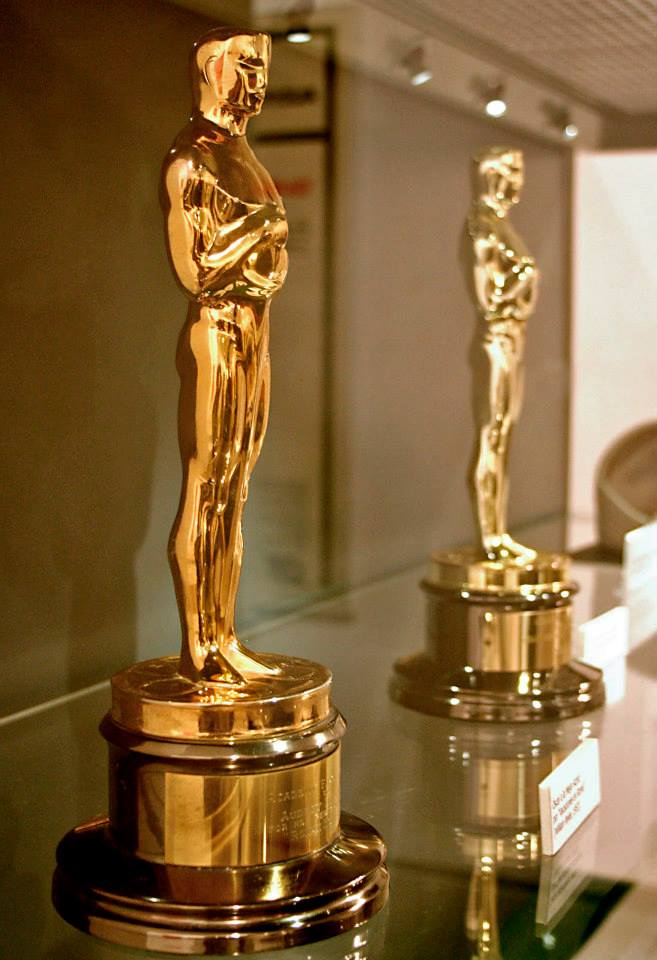
Oscar Statue
Sunday March 6th will mark the 90th Academy Awards. I have always been  a movie buff. I go to the movies less than when I was younger, but that’s because I have grown increasingly less patient with standard blockbuster fare; been there done that. Yet, when it comes to movies with an artistic bent, the kind that generally receive awards attention, I still make a point to stay engaged.

Yet, I will leave it to others to dissect this year’s field. A few years back, the number of best picture nominees was expanded to broaden public interest, but honestly I think this makes the dynamics more fragmented. So, instead I want to travel back in time two decades to the 70th Academy Awards in 1998, which honored films released in 1997.

At that time, I had recently relocated to Nashville during a time of transition at the age of 30. Maybe I can recount all the details in a future blog post, but I was working book retail, making barely enough money to pay my rent.  I was just now out as a gay man and trying to make up for lost time as far as dating and such.

I didn’t have much in the way of disposable income, but I could manage to make it to bargain matinees on my days off. Working in the media retail setting, I was hyper-aware of the various book-movie connections. This was the early days of the Internet, long before social media.

My two employers during this timeframe were Books-A-Million (still around) and Media Play (long gone). When I think about the latter, it seems like a distant lost civilization: physical CD’s and DVD’s (even VHS tapes too) mixed with books, all merchandised in a physical environment for maximum foot-traffic energy. I remember one night a regular customer mentioned a then obscure site called Amazon.com. It was going to change everything, and that prediction turned out not to be hyperbole.

The Titanic Phenomenon
I have to confess that I did not drink the Kool-Aid when it came to the James Cameron blockbuster Titanic, which earned 14 Oscar nominations that year, winning 11 of them including Best Picture. I love Leo and Kate in pretty much anything, and it’s not like it’s a bad movie. Yet, it seemed just a bit too focused on dazzling special effects at the expense of other cinematic ideals, in my view at least.

Maybe some of my sentiments were shaped by my hearing the theme song over and over and having had to deal with the crazy demand for the special commemorative coffee table book that kept flying off the shelves. (Of course, a year or two later it would find its way to the bargain tables, but that’s not an unusual trajectory.) I do think that the film reached an interesting milestone in movie marketing, a special-effects blockbuster that was targeted more to female than male teens. That was kind of interesting to see in the retail setting.

Okay, so Titanic was not really my scene, but it turns out that 1997 was still an incredible movie year. The also-rans in the Best Picture race hold up rather nicely in mind (a couple of them in particular).

Good Will Hunting
Maybe Matt Damon and Ben Afleck put my newly liberated gay self in a magic trance or something, but Good Will Hunting  became and remains my all-time favorite film. Director Gus Van Sant created an indie film vibe that was serious and artsy with just the right light touches to provide mainstream appeal. The flick received 11 nominations, with Damon and Afleck taking home the Original Screenplay prize, and the late-great Robin Williams capturing the Best Supporting Actor award for his role as a kindly psychologist coming to terms with wounds of his own.

Why did this film mesmerize me to such a degree? Well, I know things like this are purely subjective. The Boston street locations were minimalist but somehow rendered brilliantly with the blend of cinematography and editing. (Years later, it was a treat to visit the Boston area in real life.) Yet, ultimately, I guess the lead character of Will Hunting and his equal parts of genius, bravado, rebellion, and heartache really came to life for me. As an added bonus, the film makes a strong case for the benefits of mental health treatment.

As Good As It Gets
Speaking of mental health issues, Jack Nicholson’s turn as a grouchy author afflicted with severe obsessive-compulsive disorder holds up quite nicely. Directed by comedy/drama master James L. Brooks,  As Good As It Gets  was nominated in seven categories and took home the lead-actor statues for both Nicholson and Helen Hunt.

The story provides an excellent case study of flawed people finding love and acceptance. While the abovementioned Robin Williams certainly deserved his supporting actor win for Good Will Hunting, I think that Greg Kinear provided a worthy competitor for his nominated performance as a gay neighbor thrown into a complicated drama with Nicholson’s homophobic character.  The idea of deplorable people redeeming themselves through noble acts remains a topic worth exploring.

L.A. Confidential
Writer-director Curtis Hanson’s L.A Confidential  featured an all-star cast of late ’90s stars and stars in the making in a stylish and sophisticated tribute to old-fashioned film-noir in the tradition of Chinatown.  L.A. Confidential received nine nominations and won for its adapted screenplay and for supporting actress Kim Basinger. Like the abovementioned Hunt, I think that Basinger often seems to practice her craft in a more nuanced and understated fashion, but when things click, they click.

Hanson, who passed away recently following a battle with dementia, left a solid body of work. He also directed one of my all-time favorite psychological thrillers The Hand that Rocks the Cradle.  I hope that film audiences don’t forget about him in the years to come.

The Full Monty
Admittedly, The Full Monty  finding its way to the pack of five Best Picture nominees may seem a bit of a stretch. Yet, the little British gem, which captured a win for its whimsical score, showcased some of the matters that–in my humble opinion–the English seem to tackle with greater ease in their films. Sexuality among a group of laid-off factory workers turned male strippers was democraticized in a way where bodies need not be perfect. Also, the realities of class were handled with refreshing honesty and insight.

I know that physical video rental stores are pretty much an extinct relic nowdays, though my other half and I did stumble upon one in a hispster urban neighborhood of Atlanta in our travels this past fall. Yet, whether from your local public library or Netflix disks via the mail or an Internet streaming service, I urge those of you who missed this era to play cinematic catch-up.

Netflix Streaming for the Holiday Season and Winter: One Show You’ve Probably Heard About and Two You May Not Have

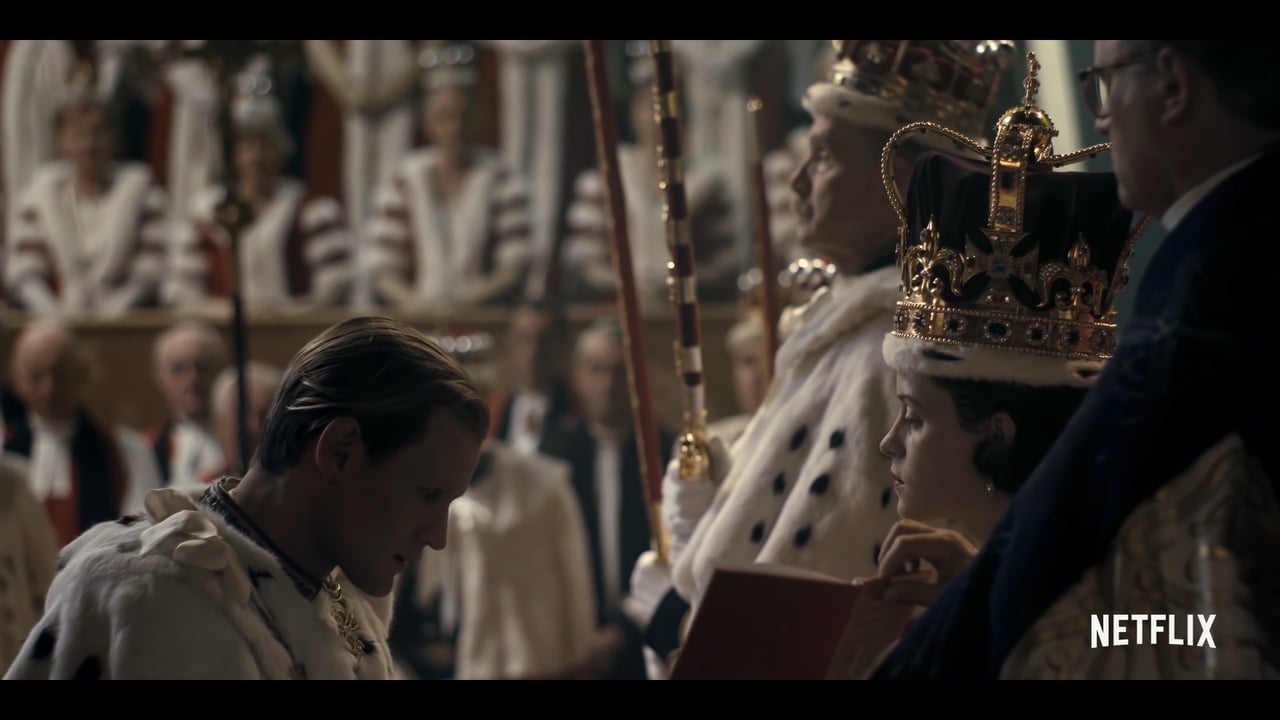
The Netflix series The Crown shows the coronation of Queen Elizabeth II.
The hit Netflix streaming series The Crown portrays the pageantry of Queen Elizabeth’s coronation.

Unless I have readers in the Southern Hemisphere, most of us find ourselves facing the colder and darker time of year. If  we have some extra free time during the holiday season, chances are good that many of us prefer to stay indoors at home.

Recently, my other half and I once again “cut the cord” and ditched cable television. We have gone through this cycle before; we may very well take the bait if there are low-cost offers in the future, but we are okay without cable. Digital rabbit ears give us pretty decent reception for a couple of  the local broadcast stations, and as I have mentioned in previous blog entries, Netflix streaming offers a world of entertainment choices.

Yes, there is one Netflix offering that I watch that does come with a ton of hype. Also, there are a couple of others that I have discovered that may not be front and center. There are so many original Netflix programs that it’s so easy for worthy viewing options to get lost in the shuffle. But, I will start with the blockbuster…

A New Season of The Crown
During my early teen years, America seemed obsessed with the marriage of Prince Charles to Lady Diana. I can’t say that I was a die-hard anglophile, but I have always maintained a historical appreciation of the British monarchy and Queen Elizabeth II in particular.

On December 8th, Netflix unveiled the eagerly anticipated second season of the royal drama The CrownThe first season introduced us to the pomp and excitement of Queen Elizabeth II’s coronation and early reign. She held her own and grew into the duties of the job, even though she lacked the glamour of her younger sister Princess Margaret.

I am now about two-thirds’ through the second season. As I have heard reviewers declare The Crown needs to be savored as opposed to quick binge-watching. The details require staying on your toes a bit. Yet, I find myself mesmerized. Even for someone who thinks he knows a fair amount about history, there are so many new revelations.

In particular, I was struck by the many fascinating parallels between Great Britain’s war against Egypt–undertaken by Anthony Eden, Churchill’s successor as Prime Minister in 1956–and America’s war against Iraq during the administration of President George W. Bush.  The political dynamics and fallout seem quite similar.

Also, Queen Elizabeth’s strategy to give her husband Prince Philip more substantive duties in the face of his being tainted by the scandalous bad-boy antics of his inner circle of advisers seems especially timely. And, there is never a dull moment when Princess Margaret upstages her sister at every turn while fighting to live the kind of carefree life that doesn’t quite fit her time and place. And there is the Duke of Windsor, exiled in France but always managing to make life difficult for his niece.

So, I think I think The Crown lives up to the buzz. It has just the right mix of soap opera and substance to seem both fun and enlightening at the same time. Now on to a couple of other recent favorites…

Derek
Derek made its way from Great Britain’s Channel 4 to Netflix and ran for two seasons plus an additional special, so perhaps that makes it a two and a half season series; I am not sure. At any rate, the series features ground-breaking funnyman Ricky Gervais both behind and in front of the camera. Gervais deservedly scored Emmy nominations for the program in 2014 and 2015.

In a  mock-documentary style familiar to fans of The Office–the original British version of which also starred Gervais in the leading role–Derek centers on a long-term care facility for the elderly from the point-of-view of Gervais’ title character.  Derek works faithfully as an assistant in the home and possesses a child-like vulnerability that some may associate with developmental disabilities of various types, though it’s worth pointing out that Gervais has publicly stated that the character is not intended to represent any particular diagnosis or condition.

Derek models an unassuming type of devotion to the residents and his colleagues that transcends syrupy sentimentality. In my mind, British television and movies often deal with issues of class and the gritty side of live in a more honest and powerful manner than does American entertainment. Yes, there are heartwarming heroes like Derek’s loyal supervisor Hannah, but there are also some pretty shady characters and rough edges.

As a series, Derek weaves together threads that one would not expect, heartwarming but in an edgy street-smart fashion. I don’t want to give away too many plot points, but if you like the slice-of-life style of comedy with some dramatic elements, give this one a try.

Atypical
Atypical launched in August of 2017 and has just one season under its belt so far, though it has been renewed for a second season. The series centers on the social and family life of an 18-year-old teenager named Sam. Diagnosed with autism at a young age, Sam manages to carve out a highly functional teenage experience for himself, thanks in no small part of his supportive family. Yet, when he takes steps toward dating, the delicate balance on the home front stars to unravel.

Keir David Peters Gilchrist, who also starred as a younger teen in the excellent short-lived Showtime series United States of Tara brings Sam to life with grace and empathy.  As Sam’s younger sister Casey, Brigette Lundy-Paine gives us a palpable sense of how siblings in special-needs situations often find themselves growing up a bit too fast in the face of extra pressures and responsibilities.

Veteran actress Jennifer Jason Leigh plays Sam’s mom Elsa to perfection, highlighting the kinds of struggles that happen when the perfect spouse and parent comes face to face with old wounds and regrets. On the other side of the coin, Sam’s dad Doug–portrayed by Michael Rapaport–has pulled off a transformation from being unprepared and involved in the difficult early years of his marriage to becoming more centered and grounded in mid-life.

I find Atypical compelling and thought-provoking on multiple levels. I see a family that I want to get to know better, warts and all. From what I have read online, reaction in the autism community has not been entirely positive. The show’s creator Robia Rashid cut her chops working on such sitcom staples as How I Met Your Mother, so I don’t think folks should expect a straight-up educational treatment. (I will add that the subject matter did pique my curiosity, so I watched–and thoroughly enjoyed–the documentary Autism in Love, also available on Netflix streaming.

Happy Holidays!

Turning the Big 5-0 and Checking Out Brad’s Status

Ben Stiller at airport ticket counter in Brad's Status
The title character in the new film Brad’s Status, played by Ben Stiller, tries in vain to secure a first-class upgrade to travel with his teen son to visit potential college choices in New England.

This month marked the half-century milestone for me. I am not one of those folks who  complain about aging itself.  As a practical point, I always liked that old adage about birthdays being better than the alternative. Yet, when contemplating aging, I can’t help but find myself asking those bigger questions about life.

A couple of weeks or so after the birthday passage, my other half and I spent a too-warm-for-September afternoon at a matinée of Brad’s Status, a new comedy/drama written and directed by the highly creative Mike White and starring Ben Stiller. I have always held a soft spot for Ben Stiller. He’s around my age, and across his wide body of film work–ranging from gross-out cheap laughs to cutting-edge artistic breakthroughs–he has always projected an approachable vulnerability that I appreciate.

This post does not serve as a review per se. I will attest that Brad’s Status turned out to be a highly engaging experience for me at every level. The plot surrounds a middle-age, middle class guy named Brad Sloan who takes his high-school senior son on a cross-country trip to visit potential college selections, most notably the ivy-covered Harvard campus. The quirky kind of biting humor is right up my alley, but more importantly, the movie made me think about nagging questions that I’m not afraid to confess run through my head at varying intervals.

This seems kind of mundane. “Is that all there is?”
The divine Miss Peggy Lee sang the familiar refrain in her hit 1969 song.  I think it’s human nature to wonder why the day-to-day stuff of life isn’t quite as spectacular as we dreamed it would be. Sometimes the passion and excitement just aren’t there, and there is a sense of being on auto-pilot.

Why don’t I seem to be one of the cool people? Is there something wrong with me?
Sometimes the commodity that seems to be the hottest is youth, which makes reaching midlife a bit touchy on some fronts.  At other times, it’s about perceived social graces or networking potential. As Brad experiences, these matters can be as minuscule as getting a better seat at a restaurant or as consequential as gaining the attention of those who can possibly determine our future well-being or that of those we love.

Why does “so and so” in my life seem to have it made in the shade when I don’t?
The comparison game can be deadly to one’s mental, emotional, and spiritual well-being. In my younger years, the struggle was more in-your-face in those settings related to school and the various rites of passage in childhood and young adulthood. So, on the most obvious levels, the challenge gets easier with time. Yet,  those old nagging doubts can resurface with the right trigger, and sometimes seeing the lives of others played out on the social media landscape makes that problem worse. Of course, envy is not a new phenomenon at all though.

So, what is the answer?
I wish I had words of wisdom to magically wash away all of these kinds of doubts for myself and everyone. Sometimes folks double down on the “think about others who have it worse” mantra. Not to give away too many plot details, but there is a memorable cross-generational conversation along these lines in Brad’s Status.

I certainly appreciate the kernels of truth with those statements. I do believe that just about all of us could use a more ample supply of empathy and decency. I also think that sometimes a hard-hitting reality check gives us just the right dose of perspective when we need it the most.

Also, as played out in the film’s story line,  quite often our understanding of what others might be experiencing themselves or thinking about us–or more accurately not thinking about us–turns out to be based on misinformation or limited knowledge of the broader picture. You just never know what’s happening on the other side of the divide.

Yes, gratitude is indeed at the center of it all. Yet, for me, it doesn’t seem sustainable fueled only by “it could be worse,” or “other people aren’t as great as they seem,” as those can become new variations of the same old comparison game.  Rather, it’s about finding meaning from the journey. We learn and grow from experience, and hopefully we can find joy along the way and leave the world a bit better place in the end.

As I see it, gratitude in its most lasting form requires a couple of other things to take root. One is a sense of purpose, and the other is the capacity to live in the moment. As we taste the slights and disappointments big and small, it helps to know that we are part of a bigger story than the one that other people may be writing for us. Also, the seemingly little moments of happiness–as Brad learns in traveling with his son–are often what’s really priceless, and it’s so frighteningly easy to miss them because of our fears, worries, and preoccupations.

I don’t claim to have it all figured out by any means. I have good days and bad. I  realize that I haven’t been everyone’s cup of tea, and Lord knows, I have my quirks and imperfections. Yet, I know that it’s been a pretty good ride so far, and I am thankful to have loved and been loved and have had a little fun so far. That’s a pretty good status.