Trying–And Failing–To Build a Bridge While Cruising the Cumberland

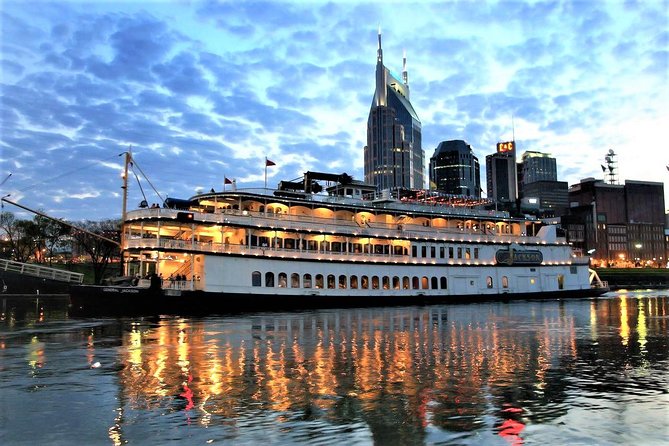
The_General_Jackson

My spouse Tom and I try to be reasonably friendly with strangers–at least in terms of basic civility–but given the hot-button situations out there, we also try to practice the sort of boundaries that prevent a potentially ugly scene. We look for clues with regard to how receptive folks might be to our situation, and we become especially mindful of when we might be stuck in an awkward shared seating or dining arrangement.

Late this past September, Tom and I found ourselves in one of those thorny encounters. We had just come out of two weeks of quarantine from a breakthrough COVID infection during the height of the Delta variant, so it felt especially good to get out of the house on a weekday evening and play tourists in our own city. We boarded Nashville’s General Jackson Showboat for a dinner show cruise; we had booked that evening’s sailing in particular, because a good friend of ours was part of the talented group of musicians performing.

Upon boarding, we found our assigned table and were soon joined by an outgoing middle-aged man and woman. We exchanged pleasantries and learned that they were celebrating their anniversary and had recently moved from Southern California to a rural enclave in one of the suburban counties outside of Nashville. Both husband and wife declared that they had fled the Golden State because they didn’t like “having their tax dollars support lifestyles they didn’t agree with.” Hmmm, just what lifestyles are those, we wondered, but of course we didn’t ask.

Another married straight couple arrived at the table. They identified themselves as tourists from Montana, where they own and operate a ranch. Please let me state for the record that I grew up in a rural community in Western Kentucky and maintain deep respect for folks from all settings and walks of life. So, no judgment intended, but the husband projected a rather bold and crass swagger in pretty much all his interactions.

The Montana wife was pleasant and soft-spoken, but in mere seconds, they both developed an instant kinship with the California-to-Tennessee refugee couple and firmly asserted their preference for Red State life and their disenchantment with all things urban and progressive. At this stage, Tom and I largely withdrew from the conversation.

I will give the California husband and wife credit, sort of, for trying to engage Tom and me in some chit-chat. They asked us if we were brothers and quizzed us about our family ties. I think we did end up stating that we lived in the same condo, but we did our best to keep our cards close to the vest, given the tenor of the other threads of conversation at the table. We don’t wear wedding rings, as Tom is not a fan of jewelry, but I still figured that at some point, we got our point across without exactly spelling out our nuptial status.

I know this always seems patronizing to say, but I have people I like and care about who hold political or religious views with which I don’t agree. It’s not a matter of me wanting ideologically segregated dining, far from it. Yet, in a communal setting with total strangers all trying to consume and digest their food, I think there is something to be said for trying to keep things on a superficial level until or unless all the parties involved seem comfortable with the line of questioning.

Thankfully, Tom and I were able to spend the time in between dinner service and the start of the show on the outdoor deck. We took snapshots of the lovely Nashville nighttime skyline and gave one another a chance to vent about our dining experience.

In our perfect world, we would just say “we are married,” and move on with wherever the conversation headed. Yet, in this particular situation, we didn’t muster the confidence to lay things on the table with that level of directness. That sounds cowardly, I realize, but then again, events later in the evening re-enforced our hesitation.

After parting the table with minimal discussion beyond the most generic of goodbye well wishes, we made it to the stage, where we caught up with our musician friend and chatted for a few minutes about how much we enjoyed the show. We then made our way to disembark the boat.

There were multiple corridors leading to the exit, and it was rather dark, so as we walked from one direction, we heard the couples from out table talking with one another, but I don’t think they saw or heard us. California wife was asking the Montana couple about whether they had been able to take in the honky tonks and other attractions in the Downtown tourist area. Montana husband replied that they had tried but that, “the queers were all over the place.”

My initial reaction was seething rage, but I didn’t engage. I just gave myself permission to mentally process my anger for a moment. (I won’t say what I was thinking at that exact moment, but it wasn’t pretty.) I realize that Montana husband was probably referring to visitors from the recent Nashville Pride Festival. I didn’t have a chance to hear any context or explanation from the overheard conversation, but I guess Montana husband thinks that we gays don’t need to flaunt our sexuality.

My response to such a complaint would be that we gay people have had to contend with straight people holding hands and displaying the nature of their relationship for a long time. We aren’t asking for anything different than the things that straight people already take for granted. Do Tom and I attend the Nashville Pride Festival every year at this stage in our lives? Not exactly, but I fully appreciate the affirming purpose these events serve for so many.

So, even though we might have seemed timid at the table, Tom and I aren’t going anywhere. We will continue to live our lives and not apologize to anyone. We are fulfilling our dreams and doing our best to be stand-up members of the community and decent humans. If anyone objects to that, well, it’s their loss, because I think we are worth getting to know. I can honestly say that, initial reactions aside, I don’t hold ill will toward our dining companions from that night. Tom and I are way too blessed in our lives to fixate on the haters.

Alligators and a Stomach Flu: December 2019

Alligator
A Snapshot from our December 2019 Everglades Safari

For me, the oddness of 2020 actually began in December of 2019. My other half Tom and I few  from our home in Nashville down to Fort Lauderdale a couple of days before we were set to board a Western Caribbean cruise.  (The itinerary had been slated to include the novel and mysterious destination of Cuba, but Washington had declared otherwise, so it was back to a more conventional voyage.) We were still super excited to be hitting the high seas, as we always are.

After landing in the Sunshine State, we boarded a shuttle bus to stay in a hotel that caters largely to folks coming and going from the cruise port. Seated on the bus, we happened to notice an older woman sitting alone and wearing a disposable face mask. Like us, she was checking in for pre-cruise rest and relaxation.  I remember thinking to myself that a mask seemed pretty extreme, but I should be more understanding, given that I had immunity of steel. I never caught stuff, so I just counted myself blessed. 

We enjoyed some karaoke in the lounge that night.  Tom is the musical one, so he signed up for multiple turns at the microphone, and I played the cheerleader role. It was cheesy over-the-top fun in a place where such frivolity seems par for the course. 

We had booked an all-day Everglades tour, so the next morning we got up early and met the tour van in front of the lobby. There were alligators and seabirds galore. We road two different kinds of boats during our outing and even got to watch a pod of dolphins. We dined on a lunch of all things fried, including gator tail appropriately enough. 

It was such a fun day; we are both such animal and nature lovers that we were like kids in candy store. That night we took an Uber to walk on the beach just to say that we had done so, but we had had a long day and were getting ready for another long day, so we made a point to get back to our room early. 

Around midnight, I woke up suddenly with pangs of nausea like I had not experienced in a long time. I rarely get sick at my stomach in that way. I will spare you the details, but the gators whose grease-soaked tails I had chomped down on a few hours earlier had their revenge. I settled back down to sleep, offering both myself and my concerned nurse husband the naively optimistic reassurance that it was just all the fried food I had consumed.

I woke up a few hours later feeling even worse. Thank goodness I had plenty of dollar bills to get cold Sprite (Was it one or two or three 16 ounce bottles, I don’t remember?) from the vending machine right around the corner from our room. Tom, bless him, Googled the nearest pharmacy and booked an Uber to make a quick trip there. It was some serious role reversal, as he is usually much more likely to develop ailments or infirmities when we travel. Yet, I guess eventually it was going to be my turn.

I know Tom brought back both Tylenol for my very ovbious feverish symptoms and some sort of stomach remedy (Emetrol maybe? That’s the stuff that got me through a rough morning or two in my college years, but that’s another story.) He also got us each a travel size bottle of hand sanitizer. “We will need to use this stuff religiously now,” he declared. Little did I know that, along with the mask-wearing traveler on the shuttle bus, it was a glimpse into what would become our normal daily routines three months later.

I kept trying to will myself into health, but I knew I wasn’t up to par. At least I wasn’t actively sick at my stomach when it was time to check out and go down to the lobby to board yet another shuttle bus that would take us to the cruise port. I figured we would just play this out and see what happens. We got to our ship, and the usual excitement when we saw the name on the side was tempered by my condition.

I knew from our previous sailings that there would be health screening questions on the initial check-in form. I am not trying to brag on my honesty here. I knew that even if I lied and said I was fine, I would be subject to quarantine in our room if the medical staff found out that I was sick, so not much of a cruise.

Sure enough, we got pulled aside instead of being directed to the gangway to continue the boarding process. It seemed like we waited forever, but I was starting to feel worse again, so I think I lost my sense of perception about things. I am usually so hot natured that I never encounter an air conditioner too cold for me, but this was South Florida, so the inside terminal was chilled to the temperature of a meat locker.

The ship nurse came to take my temperature, a really nice lady whose nametag indicated she was from South Africa. (That’s always a fun little aspect of cruising, learning the backgrounds of the crew. ) She took my temperature, and no surprise, I had a fever. Not high enough to be life-threatening, but not low enough to just “shake it off.”

The nurse left to confer with the ship’s hotel director–more waiting. I think the hotel director actually made an appearance, but I am foggy on that part. Yet, eventually someone’s assistant’s assistant gave us a written memo stating that, regretfully, we were denied boarding but that as a consolation we would receive credit toward a future cruise. Honesty really was the best policy. Yay!

So, more waiting for our luggage to be retrieved. That gave us time to contact the airline and change our return flight to the next day. We then made arrangements to go back to the same hotel for another night. I knew that our travel insurance would pay for that part, and I also figured that a night’s rest might be helpful before getting on a plane.

We checked in to a different room, and I was so glad to be back in a bed. I needed something on my stomach, but the hotel menu was basically heavy bar food. So, Tom got resourceful and used Uber Eats, which was a fairly new experience for us that would soon become yet another 2020 staple. The delivery of deli chicken soup really hit the spot. I felt lousy, but there are worse places to recover from sickness.

So, I was better in the morning–not 100 percent–but not really in the throes of full-fledged sickness either. The flight was pretty uneventful and pleasant all in all. We did have to contend with being seated right behind an overly enthusiastic bachelorette party tribe, but that’s a big chunk of the Music City tourism market. So, not quite the napping vibe I wanted, but I was reasonably comfortable.

After we got back home, Tom caught my virus and suffered the same effects for a couple of days, but then we managed to get back into our normal routines. It was evidently one of those potent but mercifully brief little bugs that was gone in two days. I am so blessed as far as my health and all the various other good things in my life. So, getting denied cruise boarding was definitely a “First World Problem.”

We got excited about the prospect of a make-up cruise, which we planned for the following April. Well, we all know what happened in February and March… It seemed like an odd coincidence that a virus kept us off the sea, and then a global virus shut down pretty much everything a couple of months later. (Knock on wood, that cruise will finally happen in 2022.)

I wanted to recount all of this on my blog earlier, but somehow it seemed shallow and tone-deaf to discuss my little inconveniences and discomforts during a time when folks were losing their lives and livelihoods to the pandemic. So, I say this knowing that I have been super lucky in every way, but sometimes, you just have to roll with it and make the most of things even when your plans don’t quite work out.

In closing, I think the lady wearing the mask had the right idea in hindsight. And, it really was cool to get to take pictures of alligators and also eat some alligator tail too.

A Fun Little Getaway to the Site of the Scopes Monkey Trial

Front Page News
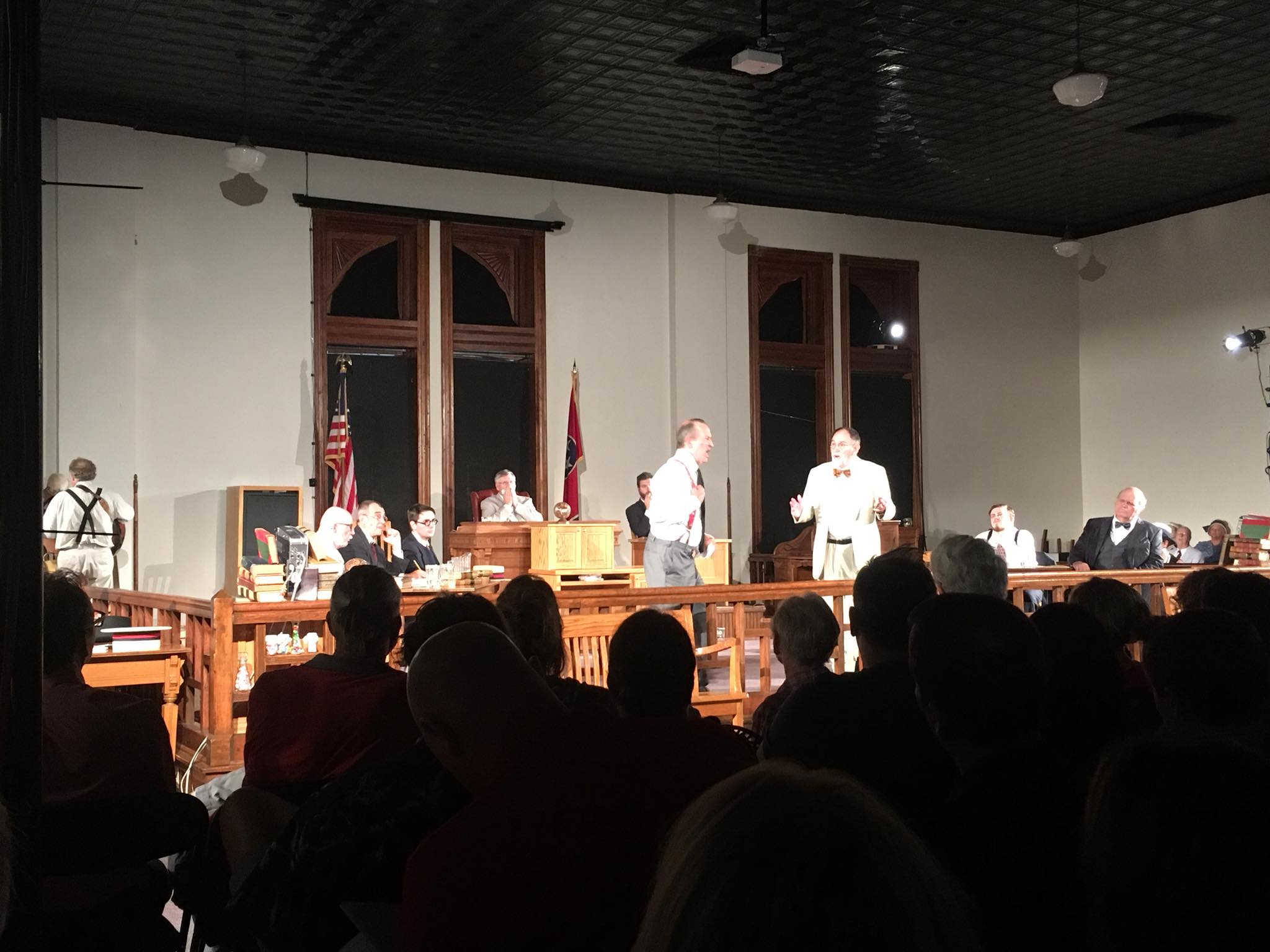
As part of the annual Scopes Festival, the play Front Page News is performed in the same Tennessee courtroom where the Scopes trial took place.

Sometimes, the places that are relatively close to where we live are the destinations that we say we want to visit when we “get around to it.” As shared in previous blog entries, my other half and I reside in Nashville. There are a wide array of day trips and weekend getaways in our neck of the woods. One of these–about a two and a half hours away from us–is Dayton, TN. A  couple of months ago, we made it there for the first time.

In the hot and sticky July of 1925, Dayton became the center of the media universe as site of the Scopes Monkey Trial. The proceedings happened to coincide with the earliest incarnations of national live news broadcasts by the rapidly growing medium of radio. Print journalists from major outlets across the country also made their way to the small mountain community roughly forty miles from Chattanooga.

The trial came about through a curious mixture of small-town tourist promotion with a desire on the part of both supporters and foes to test the heretofore unenforced Tennessee state law known as the Butler Act, which forbade the teaching of any scientific theory denying the biblical account of creation  (For a pretty decent timeline and synopsis of these events, check out a 2005 NPR item done in conjunction with the trial’s 80th anniversary. While much has been published about the proceedings and their aftermath, for a thorough book-length examination, I can personally vouch for Edward J. Larson’s Summer for the Gods.)

I have always maintained a deep fascination with the Scopes trial for a host of reasons. First, it marked a major turning point in the national dialogue concerning faith and science and the compatibility between the two. Also, the conflict established fault lines between the power of national religious identity and the rise of secularism. In a related twist, among Christian believers themselves, the split between evangelical/fundamentalist perspectives and more theologically liberal voices became more pronounced.

On a broader level, I think the “Roaring Twenties” holds a fair number of parallels with today.  America was grappling with changing social mores and the rise of modernity in national life. Also, immigration and urbanization had left wide swaths of the South and Heartland shaken by the changing face of America. Both then and now, trends can sow the seeds for countertrends.

Like many other folks, part of my interest in the Scopes case was fueled by watching the 1960 film Inherit the Wind, a fictional story based on the real-life events of the Scopes trial. Spencer Tracy is one of  my all-time favorite actors, and he shines in the character inspired by high-powered defense attorney Clarence Darrow. Likewise, Gene Kelly delivers an excellent portrayal of the equivalent to acerbic newspaper columnist H.L. Menken. And, I can’t leave out Fredric March for his turn as the figure modeled after fiery populist national political leader and religious crusader William Jennings Bryan.

Yet, as much as I adore the experience of watching the movie and appreciate the light it sheds on the debate about faith and science, some fine points bug me a bit. The film features Dick York–future Darrin #1 on Bewitched–in the role of the young teacher on trial for teaching evolution; he sits in a jail cell during the trial, an object of scorn and ridicule. In actuality, Scopes was never jailed, and punishment for violating the law was a 100 dollar fine. While the national political and cultural implications were indeed serious, the local origins of the case were more along the lines of a publicity stunt than a vendetta against Scopes.

At any rate, the trial came and went, and Scopes was found guilty as charged, though the conviction was later overturned on a technicality, and the Butler Act was repealed in 1967. In terms of the over-arching conflict, secularism and modernity carried the day in much of the wider culture and the media. Fundamentalism retreated to begin building up its own self-contained institutions, including a prominent college built in Dayton and named after  Bryan, who died suddenly while still in the town a mere five days after the trial’s conclusion. Decades later, similar conflicts would again play out on the national political stage and reshape the partisan political landscape.

Rhea County Courthouse
The Rhea County Courthouse in Dayton, Tennessee serves as the site for the annual Scopes Festival each July.

Scopes Museum
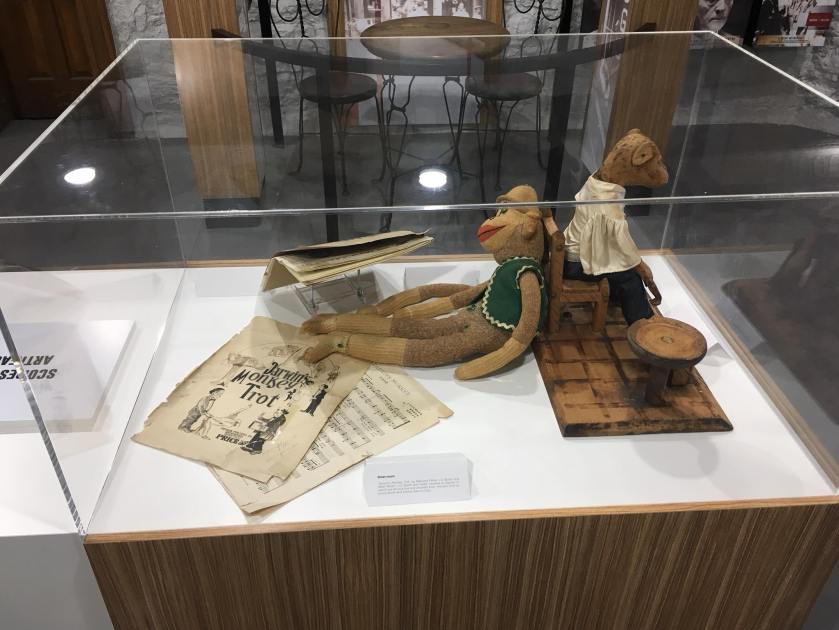
The Scopes Trial Museum in the basement of the Rhea County Courthouse houses artifacts and memorabilia related to the major 1925 media event.

Strangely enough, the tourism angle of the Scopes Monkey Trial took several decades to come to fruition. In the 1970s, a major renovation project restored the Rhea County Courthouse to its original glory, and a  museum devoted to the trial (remodeled in 2018) was added to the basement. In the 1980s, the annual Scopes Festival began as an opportunity for the community to commemorate the event that put it on the map.

The timing of the festival coincides with the anniversary of the trial itself. In addition to such staples as food and bluegrass music, the festival now includes the highly entertaining play Front Page News,  a re-enactment of the events surrounding the trial. As an added bonus, the drama plays out in the very courtroom where the actual trial happened.

Downtown Dayton
Here is some of the charming vibe of Downtown Dayton.

Monkey Town Brewery
In recent years, Dayton has undertaken a sometimes whimsical approach to its history.

The museum takes about an hour to tour, and it would be important to double-check on the open time and dates if making the trip to Dayton. We had a nice lunch at the Monkey Town Brewery and then sampled some of the excellent music on the courthouse lawn before and after the matinée of the play. It could have easily been a day trip for us, but we stretched things out by spending the night.

No, it wasn’t necessarily one of those action-packed getaways, but it was so enjoyable and enlightening to connect with a unique bit of history in the state where we live. If you are visiting  Chattanooga and have a bit of time to spare to make it over to Dayton, I think the museum is worth checking out in its own right. And, if you can make it to the Scopes Festival and the play when July comes around, even better.

Please Come to Boston

IMAG0495
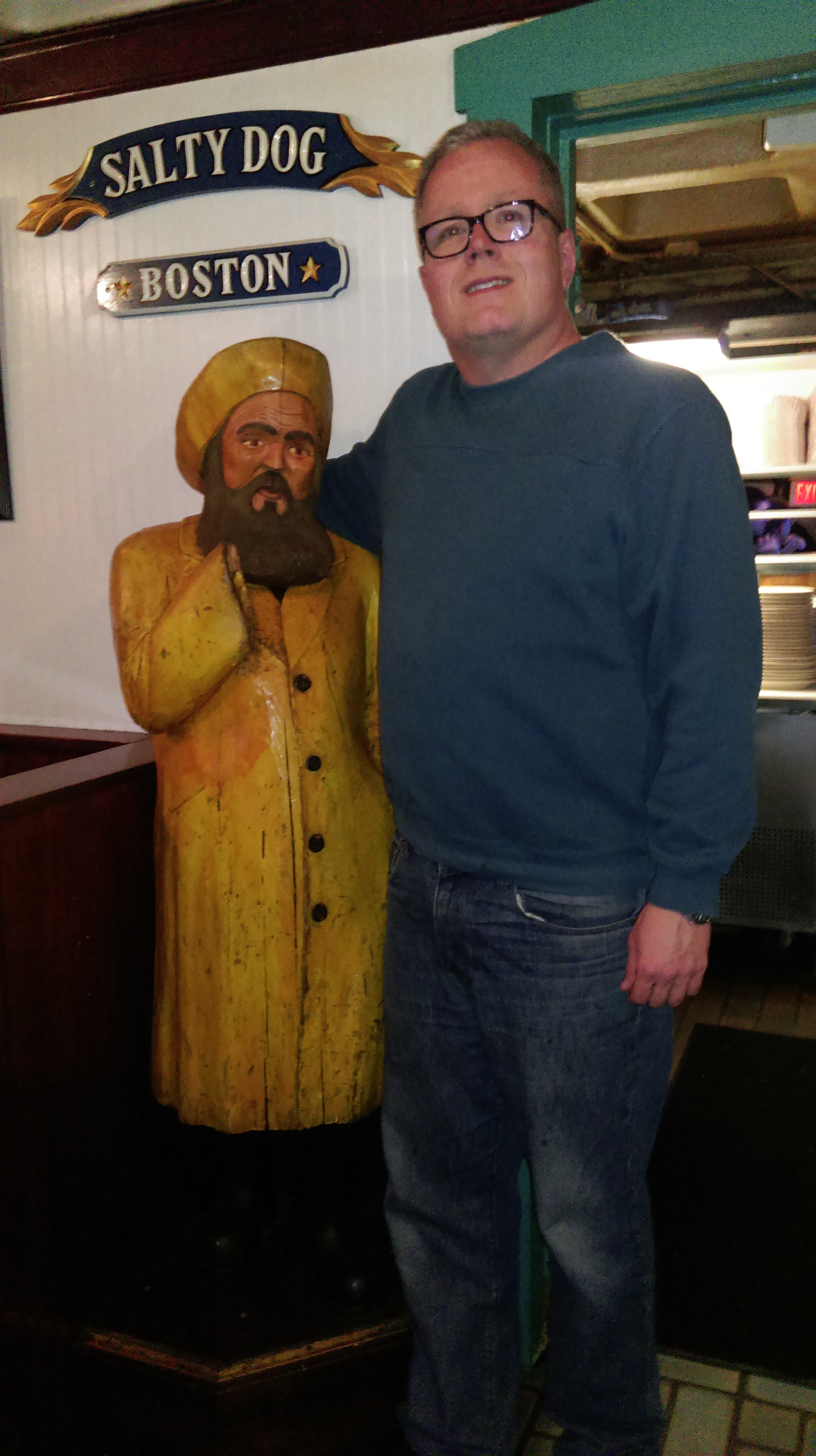
Dining with Pirates at Salty Dog, a touristy kind of place in the vast retail complex in the area surrounding Faneuil Hall. It’s hard to resist the crusty charms of Boston.

One of the most catchy little pop ditties from 1974 extolled the virtues of various American cities, but the song’s title took on the identity of one particular locale. Yes, I am old enough to remember “Please Come to Boston” from Dave Loggins, but only because I was a rather precocious little six or seven-year old in terms of soaking up everything that emanated from the radio at the time.

Anyway, I had always said that I would make my way to New England at some point. To do it up right, I know that I need to have time to perhaps rent a car and drive through the various scenic rural spots. Yet, for now, my other half and I took advantage of low airfares and took a four-night jaunt to the city of Boston.

As a Southerner, it’s easy to lump the major Northeastern population centers into the same category. It’s also very tempting to play the comparison game, especially with regard to New York, where I had the opportunity to visit as a tourist years ago. Yet, Boston has its own very distinct vibe. It marches to the beat of a different drummer and needs to be celebrated for it.

Here are some of the reasons why I fell in love with Boston.

So Much American History, Both Old and Really, Really Old
I have always been an American history buff, but I never really fixated on one particular era. Boston offers equally prominent elements from both the Colonial Era dating back to the early 1600s and the fateful time period of the 1760s and early 1770s leading up to the American Revolution. To even begin to list the historic sites you can visit is an overwhelming task. Yet, I think a good start would be to learn about the Freedom Trail, a pedestrian path that winds its way through a series of locations tied to crucial people and events in our nation’s history. Even if you don’t literally follow the trail in a set order, it provides a helpful resource where you can focus your historical sightseeing.

Different Periods of Architecture Blended Together
Often times, if you visit a major American city, you are informed of a particular “historic district” located in a particular section of the city roped off from other parts of the community’s built environment. Well, Boston makes things more interesting than that. Churches and cemeteries (so many beautiful specimens of both those things that I love so much) from the 1630s sit next to lovely Victorian and Art Deco buildings, as well as modern towers of glass and steel and busy urban shopping malls. Somehow, it all comes together very nicely, because that’s just how Boston is. It fits because the city seems to always have a way of paying homage to the past while still being able to redefine itself; that doesn’t have to be a contradiction.

Mix of Cultures and Neighborhoods
As stated earlier, Boston showcases so much of the story of how America came to be. A continuous part of that story centers on the richness of the immigrant experience. Against the backdrop of 17th Century English colonial landmarks, you will also find thriving neighborhoods built on distinct immigrant cultures during the 19th and Early 20th Centuries. My favorite of these turned out to be the North End of Boston and Little Italy, though I also adored the nearby Charlestown area, an important stop on the Freedom Trail and a longtime enclave of Irish American heritage.

Focus on Learning and Culture
Okay, Harvard University may not technically be in the city of Boston, but it’s just across the river in Cambridge. We weren’t quite sure what there would be specifically for tourists, but my other half and I were still dying to visit the campus if only to say that we had walked the hallowed quad. It turns out that we were in luck, as there was a charming and informative student-led afternoon tour available. There are dozens of other prominent higher education institutions in the Boston area, and together they do so much to keep the region on the cutting edge of technology. Another important educational center that I decided to visit by myself while the other half took a day trip to historic Salem is the JFK Presidential Library and Museum.

Getting Around on Foot and Via the T
Boston is one of those areas where the city proper actually seems surprisingly small but anchors a huge metropolitan region. As downtowns go, Boston’s seems relatively compact and walkable. Granted, that doesn’t mean that we didn’t get lost from time to time, but finding our way back was not all that difficult. The locals, for the most part, also seemed to take pity on us and ask us if we needed directions. Boston’s extensive mass transit system offers convenient access to most of the region’s attractions. As my other half discovered when he wanted to check out Salem, there is also a network of regional commuter trains.

Personality
I know that it’s a difficult trait to define concretely, but I still have to say that Boston truly does have personality. It’s a place where the finer aspects of modern life have taken shape but where folks don’t forget to be a bit festive and funky. It seems that everywhere you turn there’s a back story, and the Omni Parker House, the hotel where we stayed, was no exception. The hotel dining room bills itself as the birthplace of Parker House style dinner rolls and Boston Cream Pie. The basement includes a mini-museum devoted to the many famous guests over the decades and also listing two prominent past employees, civil rights leader Malcom X and Vietnamese leader Ho Chi Minh. Boston holds true to its past, not as a stodgy shrine but as a living and breathing testament to how to keep a city going for close to four-hundred years.

Some Boston Snapshots