
Netflix Streaming for the Holiday Season and Winter: One Show You’ve Probably Heard About and Two You May Not Have

The Netflix series The Crown shows the coronation of Queen Elizabeth II.
The hit Netflix streaming series The Crown portrays the pageantry of Queen Elizabeth’s coronation.

Unless I have readers in the Southern Hemisphere, most of us find ourselves facing the colder and darker time of year. If  we have some extra free time during the holiday season, chances are good that many of us prefer to stay indoors at home.

Recently, my other half and I once again “cut the cord” and ditched cable television. We have gone through this cycle before; we may very well take the bait if there are low-cost offers in the future, but we are okay without cable. Digital rabbit ears give us pretty decent reception for a couple of  the local broadcast stations, and as I have mentioned in previous blog entries, Netflix streaming offers a world of entertainment choices.

Yes, there is one Netflix offering that I watch that does come with a ton of hype. Also, there are a couple of others that I have discovered that may not be front and center. There are so many original Netflix programs that it’s so easy for worthy viewing options to get lost in the shuffle. But, I will start with the blockbuster…

A New Season of The Crown
During my early teen years, America seemed obsessed with the marriage of Prince Charles to Lady Diana. I can’t say that I was a die-hard anglophile, but I have always maintained a historical appreciation of the British monarchy and Queen Elizabeth II in particular.

On December 8th, Netflix unveiled the eagerly anticipated second season of the royal drama The CrownThe first season introduced us to the pomp and excitement of Queen Elizabeth II’s coronation and early reign. She held her own and grew into the duties of the job, even though she lacked the glamour of her younger sister Princess Margaret.

I am now about two-thirds’ through the second season. As I have heard reviewers declare The Crown needs to be savored as opposed to quick binge-watching. The details require staying on your toes a bit. Yet, I find myself mesmerized. Even for someone who thinks he knows a fair amount about history, there are so many new revelations.

In particular, I was struck by the many fascinating parallels between Great Britain’s war against Egypt–undertaken by Anthony Eden, Churchill’s successor as Prime Minister in 1956–and America’s war against Iraq during the administration of President George W. Bush.  The political dynamics and fallout seem quite similar.

Also, Queen Elizabeth’s strategy to give her husband Prince Philip more substantive duties in the face of his being tainted by the scandalous bad-boy antics of his inner circle of advisers seems especially timely. And, there is never a dull moment when Princess Margaret upstages her sister at every turn while fighting to live the kind of carefree life that doesn’t quite fit her time and place. And there is the Duke of Windsor, exiled in France but always managing to make life difficult for his niece.

So, I think I think The Crown lives up to the buzz. It has just the right mix of soap opera and substance to seem both fun and enlightening at the same time. Now on to a couple of other recent favorites…

Derek
Derek made its way from Great Britain’s Channel 4 to Netflix and ran for two seasons plus an additional special, so perhaps that makes it a two and a half season series; I am not sure. At any rate, the series features ground-breaking funnyman Ricky Gervais both behind and in front of the camera. Gervais deservedly scored Emmy nominations for the program in 2014 and 2015.

In a  mock-documentary style familiar to fans of The Office–the original British version of which also starred Gervais in the leading role–Derek centers on a long-term care facility for the elderly from the point-of-view of Gervais’ title character.  Derek works faithfully as an assistant in the home and possesses a child-like vulnerability that some may associate with developmental disabilities of various types, though it’s worth pointing out that Gervais has publicly stated that the character is not intended to represent any particular diagnosis or condition.

Derek models an unassuming type of devotion to the residents and his colleagues that transcends syrupy sentimentality. In my mind, British television and movies often deal with issues of class and the gritty side of live in a more honest and powerful manner than does American entertainment. Yes, there are heartwarming heroes like Derek’s loyal supervisor Hannah, but there are also some pretty shady characters and rough edges.

As a series, Derek weaves together threads that one would not expect, heartwarming but in an edgy street-smart fashion. I don’t want to give away too many plot points, but if you like the slice-of-life style of comedy with some dramatic elements, give this one a try.

Atypical
Atypical launched in August of 2017 and has just one season under its belt so far, though it has been renewed for a second season. The series centers on the social and family life of an 18-year-old teenager named Sam. Diagnosed with autism at a young age, Sam manages to carve out a highly functional teenage experience for himself, thanks in no small part of his supportive family. Yet, when he takes steps toward dating, the delicate balance on the home front stars to unravel.

Keir David Peters Gilchrist, who also starred as a younger teen in the excellent short-lived Showtime series United States of Tara brings Sam to life with grace and empathy.  As Sam’s younger sister Casey, Brigette Lundy-Paine gives us a palpable sense of how siblings in special-needs situations often find themselves growing up a bit too fast in the face of extra pressures and responsibilities.

Veteran actress Jennifer Jason Leigh plays Sam’s mom Elsa to perfection, highlighting the kinds of struggles that happen when the perfect spouse and parent comes face to face with old wounds and regrets. On the other side of the coin, Sam’s dad Doug–portrayed by Michael Rapaport–has pulled off a transformation from being unprepared and involved in the difficult early years of his marriage to becoming more centered and grounded in mid-life.

I find Atypical compelling and thought-provoking on multiple levels. I see a family that I want to get to know better, warts and all. From what I have read online, reaction in the autism community has not been entirely positive. The show’s creator Robia Rashid cut her chops working on such sitcom staples as How I Met Your Mother, so I don’t think folks should expect a straight-up educational treatment. (I will add that the subject matter did pique my curiosity, so I watched–and thoroughly enjoyed–the documentary Autism in Love, also available on Netflix streaming.

Happy Holidays!

The Orange of My Eye: Why I am Hooked on the Women of Litchfield Penitentiary

Orange is the New Black Cast

As I have reached mid-life, I am actually less of a couch-potato than I was in my younger years. I try to find balance through reading, music, and  hobbies like my aquarium. I view television as something to consume in designated chunks when there is something I really want to see.

Around two decades ago, Netflix came on the scene with Internet-based mail order DVD rental and managed to completely disrupt what had been a bricks and mortar experience. As the years passed, the company altered their model to focus primarily on a video streaming service for their subscribers, Truth be told, the movie selection on the streaming offering is underwhelming, so my spouse and I also still hang on to our old-fashioned mail account. Yet, Netflix streaming does absolutely excel to incredible heights in the countless array of original series programming,

A few weeks ago, one of the company’s most high-profile shows–Orange is the New Blackreleased its fifth season. Part of the beauty of a streaming service is that viewers are free to either binge watch a new arrival all in one sitting or space it out a bit more. I am somewhere in the middle, but with my other half being a nurse who works nights and likes some of the same selections I do–I have to play it by ear.

I make it a point not to be one of the sheep/Kool-Aid drinkers who watches something only because it’s deemed hip by the trend setters. I don’t like someone telling me something is “must-see TV” as I figure I am the one who decides how to spend my time. Yet, for me at least, Orange–a women’s prison series that  occupies the space between edgy comedy and poignant drama–lives up to the hype.

In a few different respects, Orange seems akin to the darkly comedic M*A*S*H, one of the most groundbreaking television programs from my childhood and early teen years. Granted, the content, subject matter, and audience dynamics are quite different. Yet,  I see broad similarities in the sense of taking the most serious of settings and somehow managing to blend irreverent humor with engaging depictions of human tragedy and brokenness.

Taking Good Source Material and Reshaping to the Media Format
For those of you either old enough to remember or schooled in 1970s pop culture, M*A*S*H formed its basis on a Robert Altman film that was itself based on Richard Hooker’s Korean-War novel. The show’s creators managed to build a small-screen sensation–with eventual high ratings that kept it running for about four times longer than the actual length of the Korean War–by figuring out how to adjust the material to the venue of weekly half-hour television. Pulling off something like that counts as a pretty amazing skill in my book.

In the case of Orange, the  source material comes from Piper Kerman’s well-written memoir documenting her 13-month stay at a federal minimum-security prison. Kerman, a Smith College graduate from an affluent background, became swept up in shady dealings involving drug trafficking and money laundering. She documents her experiences–and those of her fellow inmates–in such a way that lets the stories take shape without minimizing the circumstances surrounding why folks are behind bars.

In the fictional series, a woman named Piper also serves as the original protagonist, and the circumstances of her background and crime are similar. There are several of the same memorable characters too, including both Crazy Eyes and Pennsatucky, but the situations in the nonfiction book are generally much more understated.  Granted, the “white collar” prison facility was by no means Club Med, but the conflicts depicted–interesting and enlightening as they may be to a reader–don’t quite provide the soap opera intensity needed to sustain a television project. So, the drama got kicked up a notch.

A Deceptively Simple Set Brought to Life with Magical Cinematography and Art Direction
M*A*S*H presented the austere conditions of wartime on a Hollywood set back when pretty much all television shows were filmed on a Hollywood set. The green tents were far from ornate, but somehow, the scenes still came to life in a way that rivaled the high art of the big screen. Camera angles captured just the right pose for the right emotional moment.

In an era when television producers compete with one another for the most ambitious locations,  Orange  interior shots actually originate from an honest-to-goodness New York area television studio, though an old psychiatric hospital does serve as the backdrop for exterior prison scenes. Yet, somehow the end result comes together with just the right look. I am no expert on the visual artistic aspects of show business, but I think that there are some real masters working in the stark motif.

Characters You Can’t Get Out of Your Head Played by Brilliant Performers
M*A*S*H the television show had a creative team with roots going back to the days of Vaudeville-styled comic reviews. So, it’s no surprise that, even in the midst of heavy-duty dramatic story lines, viewers were treated to the antics of a cross-dressing clerk on a futile quest for a Section 8 discharge, a sometimes bumbling but well-meaning chaplain, and a surgical team fueled by the potency of gin made in their own still.

Orange moves at a rapid  pace and encompasses a cast of characters way too large to do justice in an overview, but I have to focus on some of my personal favorite. Prison cook Red–who in the book was actually named Pop and hailed from Hispanic heritage–is a Russian mobster’s wife with an appreciation for the finer things in life and a rather volatile temperament. She is played to perfection by Kate Mulgrew, If forced to choose, I have to declare her as my favorite part of the show,

In terms of raw display of acting chops, its hard to beat Uzo Aduba as the previously mentioned Crazy Eyes, aka Suzanne Warren. Suzanne’s delusions often start out with an endearing childlike quality, but ultimately the sadness of someone who didn’t get the right kind of help at the right time comes through in a painfully sad fashion.

Taking Risks with Storytelling Narrative
Okay, 1970s edgy wasn’t exactly the same as edgy in today’s context, but I remember some inventive M*A*S*H  episodes that blew up the conventional rule books of the sitcom format, including one built entirely on dreams or another created from the point of view of the spirit of a recently deceased soldier that the doctors and nurses of the 4077 had sadly been unable to save.  That was pretty impressive stuff for the time.

Each episode of Orange  selects a character–usually an inmate but sometimes a guard–and provides a parallel story line from the past. In the case of the convicts, these mini-narratives take great pains to hint at the situations leading up–either directly or indirectly–to the crime for which the inmate was sentenced without fully playing out all the events, preserving an air of mystery that may be a bit frustrating for some viewers but that I actually appreciate.

One of my favorite flashbacks surrounds the past of Sister Jane Ingalls, imprisoned for her pacifist activism.  The events depict a surprising romantic element steeped in the idealistic beatnik era of the 1960s. I remember the episode closing with the Joan Baez version of the Pete Seeger folk anthem Where Have all the Flowers Gone. It’s not that I am a total pacifist, nor do I necessarily agree with the kind of bold action the Sister had taken in her youth, but for some reason the whole thing came together in such a stirring manner.

Closing Thoughts
I think it’s important to clarify that I think prisons exist for a reason. My views on crime and punishment are pretty balanced, and I don’t think it’s right to wallow in the idea that everyone in jail is the victim of something beyond his–or actually in this case–her control. Yet, at the same time, I do think that Orange does a decent job of telling stories that speak to the human condition.

I actually detest “lock-up” reality shows–the kind that MSNBC re-runs on weekends when there aren’t any big news events–with their exploitative appeal designed for pure shock value. Yet, that is not what Orange is about.  The content has some mature and controversial elements, so it’s not for everyone, but to me it’s television worth watching. I find myself entertained, but then I also feel challenged to think a bit too.

Taking a Glimpse in the Netflix Series Black Mirror

black-mirror

Netflix streaming can become pretty addictive. My other half and I enjoy vegging together to binge on the various options from time to time. Yet, there are a couple of complications. First, he recently undertook a mid-life career transition to become a registered nurse and now works 12-hour night shifts, so figuring out how to reconcile our two schedules can present a challenge. Secondly, our tastes—while in sync with regard to quite a bit of the good stuff that’s out there like Orange is the New Black–seem to diverge due to the fact that horror, fantasy, and science fiction really float his boat, while I generally find myself drawn to subject matter that seems more directly related to concrete life experiences or current social issues.

Don’t get me wrong, I consider myself highly creative and imaginative; it’s just that I possess the type of imagination that connects storytelling to the here and now, the things that I think could happen to me or to someone I know. There is a perfect genre at which we can meet in the middle, stories that classify as psychological thrillers/suspense.  Sometimes, there can even be science-fiction style plots that veer into this territory.

Rod Serling’s Twilight Zone stands as the perfect representation of such entertainment. No, neither of us is quite old enough to have watched the original series in prime time, but we were certainly immersed in the syndicated reruns that served as a staple for late-night television in the eighties. With his eerie demeanor and unrepentant on-air cigarette habit, creator/narrator Serling introduced us to an alien time and place that always managed to provoke questions about moral,  social, and political matters. Recently, based on both the pleas of my beloved and a “you might like this” marketing e-mail from Netflix (I won’t say which was more persuasive.), I watched two episodes of the newly released third season of Black Mirror. This series, begun in Great Britain but brought to North America thanks to the deep pockets of Netflix, offers a 21st Century take on the Twilight Zone experience, where the heavy-duty issues focus  specifically on technology.

Right off the bat, one liberating aspect of Black Mirror that serves our household especially well at the moment is that, like Twilight Zone, the program presents each episode in a completely self-contained fashion. So, no worries about viewing things sequentially or skipping ahead to reveal spoilers.  Somehow, this just seems simpler to deal with, and I hope to see this become a trend in television land, but I digress.

I have only seen two episodes so far, so I can’t claim to be a Black Mirror expert. So far, I am highly impressed with what I see. Yet, I am not a television critic, and the purpose of my blog doesn’t really directly relate to rating or reviewing programs. Rather, my sampling of Black Mirror has prompted me to do a great deal of thinking even to the point of overcoming writer’s block and posting this blog entry.

As mentioned in previous blog entries, I work in the field of marketing technology. Yet,  I am just one year shy of the half-century mark, so as a Gen X member, I feel that I stand at a crossroads where I am young enough to be a player in the game but old enough to detach myself a bit. As I have said before, if the digital age ended tomorrow through some apocalyptic catastrophe, I think I would be okay. I spend a fair amount of time weighing the various pros and cons and hoping to reconcile it all. Therefore, the Black Mirror plots–so far at least–seem like crack cocaine for someone like me.

The first episode I watched centered on an alternative future society where all residents possess special microchip recorders surgically wired to their eyes and brain to record every moment of each day. Not surprisingly, the device proves itself a two-edged sword. Friends and family members replay their shining achievements to earn bragging rights and also offer feedback that may not always prove constructive. Of course, sex and relationships,  get rather complicated as well, not exactly an original idea for fans of  the film Eternal Sunshine of the Spotless Mind but compelling nonetheless.

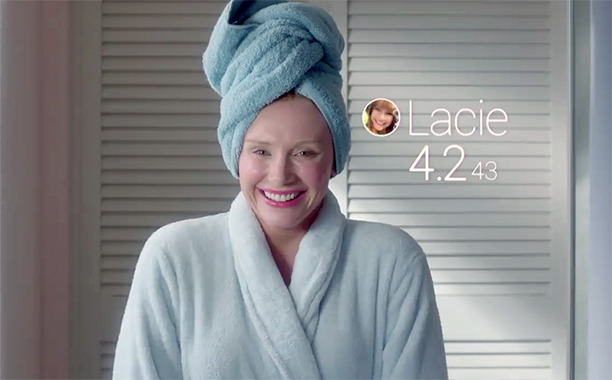
The next episode I got to see really hooked me in though. In this fictional universe that seems eerily close to the new reality, each citizen possesses an account tied to mobile and social technology where others continuously rate them on scores of one to five. Friends, colleagues, strangers on the sidewalk and in a busy airport concourse can vote up or down based on social encounters big and small or all sorts of prejudices. The scores have impacts on where someone can live, work, or travel. It’s a two-way street in that both sides of every encounter possess the power to rate one another, not unlike the real-life customer rating dynamic of the ride-sharing service Uber recently explored by Time columnist Joel Stein in an enlightening piece.

So, I think I am probably going to like Black Mirror. It’s certainly entertaining television, but more importantly, I think this line of questioning really clicks for me. I don’t think it’s a matter of saying that our ever-smarter gadgets are an evil force in their very essence. Yet, I think it’s just a matter of knowing when to step back and develop some perspective and maybe dial it down a notch. There are so many facets of how this struggle can take shape. I may explore them in greater depth as part of future posts, but in the meantime, if you have a Netflix streaming subscription and you like pondering this kind of stuff, you should give Black Mirror a try.

Four Things I Like About ABC’s Drama Series Nashville and a Couple of Complaints

4149986-nashville-tv-series

I am not one who stays glued to prime-time television. I have just a couple of current shows that I care about, and then beyond that, I take advantage of Netflix to play catch-up on the really good and edgy stuff we miss in our household because we ditched cable a couple of years back as part of a financial reboot.

I try to be intentional about investing my time and attention in a series, but fairly early on, I did drink the Kool-Aid and become a regular viewer of ABC’s evening soap set in the city I have called home for almost two decades.

It really is cool that the show is filmed here, and the location folks do such a great job of highlighting the landscapes of our community. Nashville–for better or worse–is now one of America’s “it cities,” and the weekly drama about the trials, tribulations, and misdeeds of the recording industry has certainly played a part in driving tourist growth and related media attention.

So, let me break down the elements of Music City where the show’s creators seem in tune with reality and where they might hit a bit of an off note. No, I am not personally a part of the music business, and yes, I realize that the show is a work of fiction. But, I am the sort of detail-oriented citizen who thinks about this kind of stuff.

What’s good…

Refreshing Restraint with the Accents and Such
In the past, Hollywood has presented county music and the city of Nashville with thick Dixie drawls and over-the-top down-home caricatures. In reality, many folks in this dynamic region are from other parts of the country, and those of us who hail from south of the Mason-Dixon line may speak with varying levels of twang.

Hee Haw was a beloved fixture of my ’70s boyhood and showcased some talented entertainers of its day, but today’s country music and the city that made that genre famous have evolved into something with new demographics that don’t necessarily fit the old portrayals.

The Young Hipsters Trying to Catch Their Big Break
I both reside and work in the area where the Metro Nashville/Davidson County line bleeds over into two of the suburban counties. Yet, when I make it into the center of the city for nightlife and cultural events, I often encounter young adults that really do remind me of Scarlett, Avery, and Gunner in the way they present themselves.

Of course, it’s important to not let that image become yet another cliche. However, I think it’s a fair assessment to say that this city has a large contingent of pretty folks with that same artsy vibe.

Will Lexington: One of Network TV’s Best Gay Characters
Speaking of young and attractive, Will Lexington’s journey from deep inside the closet to varying degrees of openness rings true on a number of fronts. Recently,Chely Wright and Ty Herndon have tested the socially conservative boundaries of country music by becoming out and proud. Granted, it’s an industry where things are still a couple of decades behind where they should be, but change is unfolding. I think the pacing of fictional Will’s steps toward self-acceptance nicely parallels where things stand on the public face of the business.

On a more general level, I think that the portrayal of Will and his interactions with other men conveys a balanced and nuanced exploration of the gay experience that is absolutely top-notch. Often times, television shows stick to the familiar stereotypes to spell out their glbt cred in big bold letters, and after a while those patterns seem rather limiting. Yet, at the same time, when creators strive mightily to go in the opposite direction and present gay people who “don’t seem gay,” it feels like a forced exercise without much authenticity.

There is such a thing as “gaydar,” and it’s not necessarily a matter of masculinity or femininity. Rather, it’s about a certain kind of eye contact and posturing that is hard to explain in words, but it’s real. Actor Chris Carmack absolutely nails it in his portrayal of Will and his day-to-day struggles.

Jeff Fordham: J.R. Ewing with More Attentive Eyebrow Grooming
Oliver Hudson, sister to romantic comedy princess Kate Hudson and son of  beloved entertainment icon Goldie Hawn, shines as the deliciously evil record mogul Jeff Fordham. Jeff stops at nothing to crush protagonist Rayna James (played by Emmy-nominated Connie Britton) and her valiant efforts to champion her fledgling independent label Highway 65. Jeff also has a track record of sleeping with the young starlets like Juliette Barnes and Layla Grant. When I talk to people who work in the music business, it sounds like these cut-throat corporate antics provide at least some measure of a familiar tune.

A Couple of Complaints…

Paparazzi That Don’t Exist or At least Haven’t Materialized Just Yet
When I first moved to Nashville in the ’90s, I worked retail. I waited on several celebrities, and they seemed to move around the aisles with complete ease. Over the years, like a fair number of Nashvillians, I have seen Vince Gill and Amy Grant (and their offspring) at the mall, Keith Urban and Nicole Kidman at both Whole Foods and the movies, and Naomi Judd walking the streets of historic Downtown Franklin. Absolutely no one was causing a scene in any of these cases. No cameras, no screaming, no shoving.

In ABC’s fictional version of Music City, however, the famous artists contend with a Hollywood-style media gauntlet. For example, in one episode, Rayna encountered a slew of pushy reporters when she dropped off one of her daughters at school. While the school building shown was indeed one of our lovely historic educational institutions, the chaos depicted doesn’t seem to be happening here, unless I am missing something. However, I am afraid there might be the risk of life imitating art. The digital section of  Rolling Stone has opened a special country Web site and a Nashville office. Perhaps a new culture of celebrity glitz could be in the works?

A Nashville in which the Music Industry and the Local Political Leadership Are One in the Same
Rayna, a well-established diva with long-standing ties in the community is both the ex-wife of the current (fictional) mayor of Nashville and also the daughter of a recently deceased former mayor, a tycoon who had his finger in just about every pie of the city’s power structure.

Perhaps mixing politics and show business makes for good drama, but the two worlds really don’t come together so tightly. Granted, the legendary Roy Acuff ran unsuccessfully for Governor of Tennessee in 1948, and current industry figures such as Mike Curb wield a great deal of influence in the community through their philanthropy. Yet, these two worlds are not quite as intertwined in real life as they seem to be on television.