What’s on the Mixtape of Your Life?

mixtape

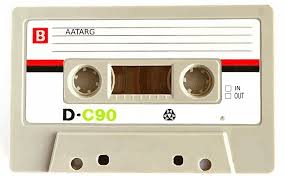
As discussed in previous blog entries, I passed the half-century mark a couple of years ago. Long before the digital era, eighties teens like myself used to purchase blank tapes and record songs on them using the cassette players of their home stereo systems. (By contemporary standards, this seems like something that the copyright law powers that be would have tried to stop, but keep in mind, the sound quality wasn’t exactly stellar.)

Still, even though “Is it live or just Memorex?” was just a catchy advertising slogan that did not reflect auditory reality, we had fun. One phenomenon that came to be was that of the mixtape, a listener-created collection of songs for various purposes, sometimes by disc jockeys for entertainment events or other times by friends or sweethearts as carefully personalized gifts from the heart.

The mixtape concept managed to survive multiple format incarnations, from compact discs to mp3 players to digital streaming services. Perhaps the more contemporary term playlist serves a similar purpose, though I am not enough of a recording aficionado to weigh in on those fine points.

Recently, I read a compelling novel, Sing You Home by Jodi Picoult, that got me thinking about mixtapes, though perhaps in a more figurative way. I don’t want to dwell on the myriad of plot elements concerning the book, other than noting that the protagonist is a music therapist by profession. She utilizes a particular ice breaker in working with new clients, “What songs would comprise the mixtape of your life?”

I couldn’t resist taking this challenge to heart for myself. A standard mixtape should contain somewhere between ten and fifteen songs. I figured I would push that limit as hard as I could. I also resisted the temptation to provide extra insight or explanation, other than to declare that these selections somehow define essential qualities of my approach to life and the self-talk that runs through my head. I have listed these songs and the artists that recorded them (at least in my version of choice) in no particular order.

Silver Springs by Fleetwood Mac

Golden Slumbers/Carry That Weight/The End by the Beatles

Wild Horses by the Rolling Stones

It Was A Very Good Year by Frank Sinatra

God Only Knows by The Beach Boys

Have You Ever Seen the Rain by Creedence Clearwater Revival

Don’t You Worry ‘Bout A Thing by Stevie Wonder

Three Little Birds by Bob Marley

Sunshine on My Shoulders by John Denver

Moon River by Audrey Hepburn (I know this is now more associated with Andy Williams, but Hepburn’s rendering in Breakfast at Tiffany’s is the version that’s extra special to me.)

Maybe This Time by Liza Minnelli

Wishing You Were Here by Chicago

No Matter What by Badfinger

Count On Me by Jefferson Starship

Let the River Run by Carly Simon

So what about you? Take some time and think about the mixtape of your life.


Goodbye Prince, and Why Mass Pop Culture Icons Aren’t What They Used to Be

High School Graduation 1985

I graduated from high school in 1985.  I don’t think that makes me “old” exactly, but I think it’s safe to say that I am no spring chicken and have witnessed a fair amount of change over the past  (almost) half century since I  entered the world that September evening as the 1967 “summer of love” was drawing to a close.

The recent news about the passing of music legend Prince certainly grabbed by attention. I always really liked Prince, but I didn’t necessarily call myself a raving fan of his in those days. In fact, at the time, my arrogant teenage refrain was that my generation’s music was kind of lame and that I had been born a couple of decades too late.

Around seventh grade, I discovered the Beatles and the Rolling Stones, and both of those groups managed to take my breath away. Then, as an angst-ridden high-school freshman, I bought a cassette of a Doors greatest hits anthology and fell under the spell of Jim Morrison for a year or so. Finally, around my junior year, the soundtrack to the The Big Chill made me think that Motown was the greatest musical treasure that had ever graced the earth, until I discovered the smooth sound of Sinatra and his Rat Pack a few years later.

So, I always seemed a bit underwhelmed by the music that people of my exact age range were supposed to be calling their own. Yet, I still owned quite a bit of it on vinyl, cassette, and–just shoot me–eight-track tape. So, I complained about 80’s pop and rock not being as good as the old stuff, but yet the mainstream music superstars like Michael Jackson and Prince were still a huge presence in my life and in the wider culture around me; there was absolutely no getting around them.

Music was a huge part of the mix, but it applied to all realms of entertainment including television and movies.  There were larger than life celebrity icons that reigned supreme, and it seemed that everyone–or almost everyone–was watching and listening.

My other half is just three years younger than me, but he never lets me forget that small but pivotal divide. He made a mid-life career change and is getting ready to graduate from nursing school in a matter of days. On the very afternoon that the untimely demise of Prince had overtaken both of our Facebook news feeds, we had a relevant and insightful conversation.

I am so proud of him, but back to the matter at hand, he and a group of fellow students were putting together a health-fair project to try to encourage organ donation. Based on his earlier training and experience in education, he thought it would be fun to do a celebrity photo game in the display. Fun idea, right? Well, it went okay, but it wasn’t as nifty as it would have been in 1985 or perhaps even in 1995, It seems that artists and entertainers today are more tied to highly segmented “niche” identities of age, rage, and socioeconomic status. Where have the universal celebrities gone?

I work in marketing, so I should have known the answer to my own question right off the bat; it seems the powers that be are now trying to tailor the product to just the right slice of the pie at just the right time and place. Yet,  it’s not just a matter of the selling strategies in play; the way we consume media has shifted so radically in such a short period of time.

We did indeed have some computers in my rural high school during the eighties. Yet, they served a rather limited range of purposes, all pretty much related to learning about technology as a potential career, which as best I remember entailed entering lines of BASIC code that would make computers answer formulas. There were a few games like Oregon Trail being developed that kinda sorta had entertainment elements, but I don’t think even they had hit the big time then. Computers were something serious and intimidating, and the idea of using them to download music or movies would have seemed like science fiction.

We had the aforementioned formats of physical music, and cassettes were still the biggest kid on the block. The big deal as far as personal  listening experience was the Sony Walkman, and I vividly remember getting mine as a Christmas present, along with a tape of Billy Joel’s amazing Nylon Curtain album. I think I did permanent damage to my hearing that holiday season, but it was great. Yet, music was still a physical commodity, and we  went to buy it in places called record stores.  (And we rode our dinosaurs to get there, LOL.)

We also had radio, and there was a finite array of choices on the dial. Breadth was often the name of the game. Granted, the major urban markets were starting to specialize a bit more into hard or soft rock, but you could still find plenty of radio stations that were trying to present a bit of everything for everyone. So, even old timers who weren’t all that enamored of modern music were still probably exposed to the biggest pop and rock tunes of the era through osmosis.

My little hometown in Western Kentucky first got cable television around 1980, though it didn’t make it to our street until around 1983. In the early days of cable, there were a few major game-changers like MTV and HBO, but it’s important to keep in mind that many people still didn’t have cable, and even when your household did, it was originally just a matter of going from three or four broadcast channels on the dial to thirteen or fourteen different cable networks from which to choose.

When Kristen was revealed as  J.R.’s shooter on Dallas that November Friday night in 1980, we talked about it at school the next Monday. There was no worrying over being a “spoiler,” because even VCR’s were still a fairly exotic luxury item. We watched shows together when they aired, and if we had to miss them, we waited until Summer for reruns. There were certainly some irritating aspects of this limitation, but looking back, I think the rigidity of the whole experience helped build the connections we made.

When major music-centered motion pictures like Footloose and Purple Rain exploded on the scene, the songs and the catch phrases managed to permeate the culture, not just among those who went to see them in the theater. The tunes and the images were everywhere, and it wasn’t confined to someone’s particular “scene.”

Please be assured that I am not claiming that the content of my Gen X formative years was absolutely perfect and wonderful, and that the millennials only have crappy stuff from which to choose. Actually, there is probably as much good stuff now as there was then, maybe even more. Yet, somehow, in my mind, the paradox of all of these entertainment choices is that the singular power of any particular one of them seems diluted in today’s crowded waters.

When I ponder all of this, I realize that what I experienced in the era of big hair and black Trans Ams was maybe kind of special after all. And, let me be clear that you don’t have to watch Dynasty to have an attitude and that I have been blaring Prince songs on my ipod for the past week.

Celebrating My Favorite Singer Frank Sinatra at 100

December 12th marks the 100th birthday of the colorful singer, actor, and pop-culture icon known as “ol’ Blue Eyes.” Mr. Sinatra went to the great lounge in the sky back in 1998, and as sad as I was when the entertainment world had to say goodbye to him, I figured that 82 was a pretty good run for a guy who was always holding a glass of straight Jack Daniels and an unfiltered Camel.

Okay, I admit that I am two days late, but I did not want this important historical milestone to pass completely without taking some time to look back on the rich legacy that this show business giant left us and why he has always held such a spell on me.

Let me clarify, first of all, that the mercurial Sinatra was no saint. In fact, he was as far from sainthood as you could get. He held notoriously long grudges with white-hot intensity, and he was prone to bullying when he didn’t get his way. While the full extent of his mafia ties remains a subject of speculation and debate, no one denies that the kid from the rough streets of Hoboken, New Jersey always carried a good bit of that edge with him into adulthood.

So just how did a Gen X boy like me growing up in rural Western Kentucky become obsessed with the leader of the Rat Pack? Well, I can trace the formative years back to two ingredients,  my mother’s old records and seventies television variety shows.

My mom was more into Nat King Cole and Johnny Mathis, but she did own a Sinatra record or two in her collection. I have always possessed highly eclectic musical tastes, so much so that I am fond of saying that if I am ever in a serious accident or medical emergency of some sort, and the person who rescues me or tries to rescue me takes the iPod out of my pocket, that person is going to look at the dizzying range of artists on my playlists and think that I am (or was) batshit crazy.

So, I loved sampling old vinyl, and the golden Rat Pack age that I had missed by a few years somehow mesmerized me. I hate to embody a gay male cliché, but as a child I was obsessed with the large crop of variety shows and specials that ruled the airwaves.

At regular intervals, NBC would air Dean Martin Celebrity Roasts from the MGM Hotel and Casino in Las Vegas. The place looked so glamorous, and I knew that I would end up there as a tourist someday. I adored the banter of aging glitzy celebrities who were fighting hard to remain relevant in the new era of long hair and leisure suits, and there were so many showbiz legends who knew how to act like the larger than life figures they were.

Martin ran the proceedings of course, but Frank was still the coolest kid on the block whose presence caused a scene. My grandmother actually thought that Martin was a better singer than Sinatra, and even though I still don’t quite agree with that sentiment, I can say that Hollywood history does indeed indicate that Martin was a much more likable human being to those around him than was Sinatra.

So, Frank was the guy who grabbed my attention even more than his talented cohorts, In 1981, Republican Ronald Reagan’s inaugural festivities included a star-studded black-tie gala orchestrated by none other than Sinatra. Even though by 1984 I was destined to wear a Mondale/Ferraro button to school every day and become a loyal Democrat, I enjoyed seeing this touch of Hollywood style; ironically enough, Sinatra had played the same role for Democrat John F. Kennedy’s inauguration in 1961,

By the time I was in my early 20’s, I owned a two-cassette collection of Sinatra’s greatest hits, and as the digital era began, I replaced it with a CD. At home alone, sometimes consuming an adult beverage or two, Luck Be a Lady and New York, New York were my pick-me up energy tunes. My Way, That’s Life, and It Was a Very Good Year captured the wistful angst I was feeling. Strangers in the Night and Fly Me to the Moon were anthems of longing for new possibilities.

I also managed to discover Sinatra’s films. The silver screen presented an interesting dichotomy where he was concerned. He had long dry stretches where his offerings were marginal at best. Yet, when he was on he was really on.

From Here to Eternityfor which Sinatra won the Best Supporting Actor Oscar, is one of my all-time favorite films. Granted, the role of the hot-tempered, hard-drinking Private Maggio did not require much of a stretch for Sinatra, but the pain and heartache still shine through in a manner that gives me goosebumps.

Interesting aside, many Tinseltown historians have asserted that Sinatra served as the basis for the fictional singer and actor Johnny Fontane in The  Godfather. The memorable scene in which a Hollywood producer who initially had refused to cast Fontane in his upcoming film wakes up to find the bloody head of his beloved horse in bed with him was rumored to have been part of the real-life drama behind how Sinatra got the part of a lifetime in Eternity. 

I would also like to make a plug for Sinatra’s compelling turn as a heroin addict in The Man with the Golden ArmSinatra wasn’t afraid to champion controversial projects that were quite cutting edge for their day. Another such film that I adore is the  The Manchurian Candidatethe consummate political thriller. I love Denzel Washington and Meryl Streep, but their remake lacked the incisive power of the brilliant original.

Speaking of politics, Sinatra’s partisan shifts have left many scratching their heads. He was a New Deal liberal who found himself teetering on the edge of blacklisting for several decades. He also championed integration of the Vegas Strip on behalf of his dear friend Sammy Davis Jr. at a time when Sin City’s racial divide was akin to the Deep South, As mentioned earlier, he was JFK’s go-to guy in Hollywood during his campaign and the early part of his presidency.

Yet, Sinatra detested what he saw as the smug hypocrisy in much of the Kennedy clan. When Robert Kennedy asked him to  drop Davis Jr. from the list of inaugural headliners because of his interracial marriage, Sinatra complied, but inside he was seething. As attorney general, RFK’s war on organized crime went after many of Sinatra’s buddies. Granted, I think there clearly were two sides to the story, but I can understand the resentment on the part of Sinatra that his influence in the underworld and in Hollywood were put to use to get JFK elected but then soon became a source of shame when the election was over.

Evidently, the last straw was a decision by the White House to snub Sinatra’s invitation for President Kennedy to stay at his home during a Southern California visit. That fracture never healed, and Sinatra made a progression from anti-Kennedy Democrat to full-fledged Republican. Of course, I also think it’s fair to say that the essence of what it meant to be a liberal was shifting dramatically in the era of the Hippie counterculture, so I think some of that evolution would have happened even without the Kennedy feud.

Sinatra also provided interesting contrasts in his multiple marriages and relationships with women. He was prone to chronic infidelity, and his histrionics were legendary. Yet, when push came to shove, he had the capacity for incredible generosity and loyalty. As Judy Garland struggled with her many demons of depression and addiction, she is reported to have received encouraging telegrams from her longtime friend Sinatra urging her not to give up the fight.

So, Sinatra holds many interesting paradoxes and contradictions. A great deal has been said and written about Ol’ Blue Eyes, and folks may disagree about the details. Yet, I think we can safely say that he was never boring, and he made the world a bit more colorful with his presence.


frank-sinatra-619x348