Sorry for the Serious Neglect of My Blog, but let me share something else.

I have to confess that I have seriously fallen off the wagon in terms of regular blog postings. I plan to get back on track very soon, but in the meantime, I figured I could share something from my freelance writing work. I don’t get by lines for it, but I have reviewed audio books for Publishers Weekly over the past decade or so. I try to keep things separate from my day job to avoid any possible conflicts or sticky situations, but no one has ever told me not to share my reviews as an individual.

I was pleased to see my recent review of the audio edition of The Seven Good Years: A Memoir  by Etgar Keret listed on the magazine’s Web page as a featured review. So, if they wanted to feature it, maybe I should too. Keret is an Israeli author who has made several contributions to the public radio program This American Life. I loved listening to his prose on audio, and now I am going to delve in to his fiction. I will let what I have already shared speak for itself, but I think there is some powerful stuff here.

Three Southern Novelists I Would Like More People to Discover

childresscover

July 14th will mark a huge day in the literary world. Go Set a Watchman, the long-lost sequel/prequel to Harper Lee’s classic To Kill a Mockingbird makes its way to bookstores, libraries, and digital gadgets. This leaves a few more weeks of summer heat–or perhaps nicely chilled indoor air–for readers with an interest in Southern fiction to try to get their fix before the big release date.

I lack the time, energy, and expertise to offer a definitive list of all the great Southern writers. I know that there are many different visions of the South, and I can’t begin to paint everything with a broad brush. So, here are just a few novelists that tackle Southern life in their works. All three have certainly found an audience of readers, and their accomplishments are noteworthy. Yet, there is a part of me that feels compelled to become an evangelist pushing a broader audience toward their books.

Mark Childress

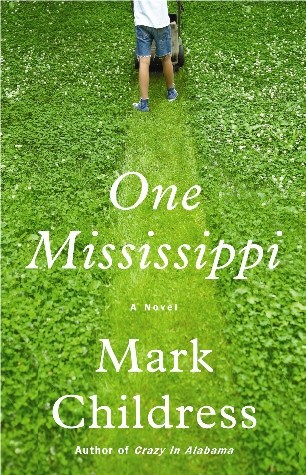
Though he now lives on Key West Florida, Childress hails from Lee’s hometown of Monroeville, Alabama. He is probably best known for Crazy in Alabamawhich became a 1999 film directed by Antonio Banderas and Melanie Griffith. The plot intertwines a woman’s bizarre journey to Hollywood after killing her abusive husband with a town’s painful struggle over the issue of race involving a public swimming pool.

Crazy is probably a natural starting point for most readers, but if someone is looking for something a bit more edgy from Childress, I would highly recommend either Georgia Bottoms or One Mississippi. Georgia centers on a young woman (the book’s title character) who maintains a dual identity of respectable small-town citizen by day and discreet practitioner of the world’s oldest profession by night. A series of sordid developments involving both a hypocritical young minister and revelations from Georgia’s past unravels the delicate balance. Mississippi, set in the 1970’s, explores a powder-keg of issues ranging from racial and sexual identity to teen angst and violence. (I realize that I seem vague here; I just can’t begin to offer an adequate summary to a book with so many different threads that tie together so perfectly.)

Clyde Edgerton

Edgerton lives and teaches in Wilmington, North Carolina; he has won tremendous acclaim in highbrow Southern literary circles over the decades and often generates comparisons to Flannery O’Connor and Eudora Welty. Yet, I have always wished that he could develop a greater following among general readers in the mainstream. He has an understated style of storytelling, but he creates some memorably colorful characters.

I especially enjoy Edgerton’s Raney, which chronicles the often contentious early years of marriage between a down-to-earth young woman from a rural town steeped in evangelical religion and a college librarian, a man shaped by a childhood in the more worldly environment of the urban South. I also recommend Lunch at the Piccadilly, which details the misadventures of a group of lively nursing home residents seeking relief from their restrictive residence.

Michael Lee West

West grew up in the Gulf Coast region but eventually made her way to Middle Tennessee, where she now lives. As a result, she moves back and forth between these two very distinct areas in providing settings for her delightful novels. The literary territory of “magnolias of steel” females from south of the Mason-Dixon line certainly has inspired a host of highly successful authors over the years, but I think West’s gift for storytelling and her strong sense of place make her worthy of joining the biggest names in this realm of Southern fiction.

I would suggest starting with Crazy Ladies, which recounts the trials and tribulations of multiple generations of women from a Volunteer State family. The action spans a variety of eras and settings, as very distinct personalities and worldviews come into play. For a taste of Bayou cuisine and culture, I would single out  She Flew the Coop: A Novel Concerning Life, Death, Sex and Recipes in Limoges, Louisianawhich lives up to its titillating title.

Stay cool and Happy Reading!

Four Nonfiction Book Discoveries That Grabbed Me

My Week at the Blue Angel


As with movies and music, my tastes in reading run the gamut. I don’t like to stay tied down to one particular genre, and I tend to go continually back and forth between fiction and nonfiction. I am always on the lookout for real-life tales with a strong sense of character, time, and place.

Those close to me probably know that John Berendt’s Midnight in the Garden of Good and Evil stands tall as my favorite book of all time. It’s the gold standard for compelling nonfiction. I haven’t found anything else quite on that level for me. However, here a few little gems that I managed to find and really enjoy, and I don’t think very many people know about them.

My Week at the Blue Angel: And Other Stories from the Storm Drains, Strip Clubs, and Trailer Parks of Las Vegas by Matthew O’Brien (Author), Bill Hughes (Photographer)

I have always held a deep fascination for Las Vegas and have made several trips to America’s desert playground. During the last couple of pilgrimages, I started to contemplate the rough edges that surround all the glitz and glamour. Journalist O’Brien offers a collection of essays exploring the funky, seedy, and dark elements of Sin City. The piece that provides the book’s title centers on an old motel that, despite its historical iconic signage, now plays host to lost dreamers on the margins of society rather than fun in the sun tourists. O’Brien presents the human spirit at work in some rather unlikely situations.

Restavec: From Haitian Slave Child to Middle-Class American by Jean-Robert Cadet

The island nation of Haiti declared an end to the institution of slavery after throwing off the yoke of French colonial rule in 1804. However, a barbaric form of bondage in which affluent households take in abandoned young children to serve as unpaid domestic laborers has endured for the past two centuries. Cadet recounts his harrowing experiences of exploitation, which didn’t stop when the family for whom he toiled took him with them when they decided to move to the United States. Now an educator and human rights activist, Cadet tells a moving story of resilience and healing.

The Shooting Salvationist: J. Frank Norris and the Murder Trial that Captivated America by David R. Stokes

The 1920’s have always provided so many fascinating contradictions: carefree excess, jazz, women dressed as flappers celebrating their newly won right to vote, a resurgence of the Ku Klux Klan, and a rise in  fundamentalist religion that culminated in the Scopes Monkey Trial of 1925. Against that backdrop, a case in which a prominent Fort Worth minister stood trial for shooting and killing one of  his congregants transfixed the nation. Stokes serves up satisfying true crime mixed with social and cultural history that holds a surprising relevance for contemporary times.

Weed Man: The Remarkable Journey of Jimmy Divine by John McCaslin

The issue of marijuana legalization has come to dominate headlines over the past year or two. A 2011 title from veteran political columnist McCaslin landed on the shelves just a tad too early to be a part of that current media frenzy. Yet, I hope that folks on all sides of the pot debate can find their way to this colorful and thought-provoking read. McCaslin details the unlikely criminal enterprise of Jimmy Moree, AKA Jimmy Divine. Moree, a resourceful young man from a deeply religious family with rather humble circumstances in the island paradise of the Bahamas,  stumbles upon a business opportunity involving cannabis. The straight-laced, non-drinking Moree doesn’t fit the stereotypes most of us hold regarding such an enterprise, and I think that plays a part in what makes Weed Man so interesting.