What’s on the Mixtape of Your Life?

mixtape

As discussed in previous blog entries, I passed the half-century mark a couple of years ago. Long before the digital era, eighties teens like myself used to purchase blank tapes and record songs on them using the cassette players of their home stereo systems. (By contemporary standards, this seems like something that the copyright law powers that be would have tried to stop, but keep in mind, the sound quality wasn’t exactly stellar.)

Still, even though “Is it live or just Memorex?” was just a catchy advertising slogan that did not reflect auditory reality, we had fun. One phenomenon that came to be was that of the mixtape, a listener-created collection of songs for various purposes, sometimes by disc jockeys for entertainment events or other times by friends or sweethearts as carefully personalized gifts from the heart.

The mixtape concept managed to survive multiple format incarnations, from compact discs to mp3 players to digital streaming services. Perhaps the more contemporary term playlist serves a similar purpose, though I am not enough of a recording aficionado to weigh in on those fine points.

Recently, I read a compelling novel, Sing You Home by Jodi Picoult, that got me thinking about mixtapes, though perhaps in a more figurative way. I don’t want to dwell on the myriad of plot elements concerning the book, other than noting that the protagonist is a music therapist by profession. She utilizes a particular ice breaker in working with new clients, “What songs would comprise the mixtape of your life?”

I couldn’t resist taking this challenge to heart for myself. A standard mixtape should contain somewhere between ten and fifteen songs. I figured I would push that limit as hard as I could. I also resisted the temptation to provide extra insight or explanation, other than to declare that these selections somehow define essential qualities of my approach to life and the self-talk that runs through my head. I have listed these songs and the artists that recorded them (at least in my version of choice) in no particular order.

Silver Springs by Fleetwood Mac

Golden Slumbers/Carry That Weight/The End by the Beatles

Wild Horses by the Rolling Stones

It Was A Very Good Year by Frank Sinatra

God Only Knows by The Beach Boys

Have You Ever Seen the Rain by Creedence Clearwater Revival

Don’t You Worry ‘Bout A Thing by Stevie Wonder

Three Little Birds by Bob Marley

Sunshine on My Shoulders by John Denver

Moon River by Audrey Hepburn (I know this is now more associated with Andy Williams, but Hepburn’s rendering in Breakfast at Tiffany’s is the version that’s extra special to me.)

Maybe This Time by Liza Minnelli

Wishing You Were Here by Chicago

No Matter What by Badfinger

Count On Me by Jefferson Starship

Let the River Run by Carly Simon

So what about you? Take some time and think about the mixtape of your life.


Two More Summer Reading Picks

The Goldfinch Cover

As the summer kicked off, I shared some of my recent reading picks. As we enter the last weeks of the season, I figured I would present a couple of other titles that have occupied my air-conditioned hours of late.

The Goldfinch by Donna Tartt

I consider myself well-read; I even minored in English as an undergrad. Yet, I must confess that sometimes contemporary works of fiction deemed as “literary” manage to intimidate me. I fear that the experience might be too much like school. Would there be a test?

So, Donna Tartt’s Pulitzer Prize-winning novel was one of those titles that I just never got around to reading. Yet, several fellow book enthusiasts encouraged me to give it a try, and when I heard that a high-profile film version had been slated for release this fall, I figured the time was right to dive into Tartt’s sprawling narrative.

The story begins with a terrorist bombing at a Manhattan art museum. Preteen New Yorker Theo, Decker loses his mother in the explosion. He also manages to develop a momentary but intense bond with a mysterious older man and his young niece who had been browsing in the same gallery. Theo undertakes a plan to rescue his mother’s favorite painting from the fiery scene, and in the subsequent days that pass, his actions morph from heroism into high-stakes art theft.

As an orphan, Theo finds himself on a journey that evokes the sweeping scale of Dickens. The socialite mother of a socially awkward genius classmate takes him under her wing for a time, but Theo’s long-lost father ends up claiming the boy and moving him to suburban Las Vegas. Theo’s exploits manage to connect him once again with the little girl from the fateful day at the art museum and her family.

Tartt has a knack for taking seemingly disparate threads and tying them together in a masterful plot. Her story becomes a Russian nesting doll of secrets and revelations. She also paints highly evocative word pictures with her descriptions of time and place in the life of Theo as a boy, teen, and young adult. Not an easy read by any means, but for me at least a highly captivating one.

Bettyville by George Hodgman

For some strange reason, I managed to miss this particular memoir from veteran book and magazine editor George Hodgman when it arrived in 2014, even though the title earned a host of book industry accolades. Sadly, I only learned about Bettyville when I saw news articles recounting Hodgman’s recent suicide. I wish that it hadn’t taken that kind of publicity, but when I read the description, I knew instantly that this was my kind of book.

Bettyville recounts Hodgman’s return to his rural Missouri hometown to care for his elderly mother as she faces the onset of dementia. Hodgman’s life in the Big Apple had been plagued by the professional upheaval of the print media business, while on a personal level he had struggled with substance abuse and the realities of mid-life for a gay single man. Upon returning to Bettyville, Hodgman reminiscences about never being able to truly reveal his true identity there. Betty’s motherly love–imperfect as it may  be–shines through her many eccentricities.

I just wanted to take a few minutes away from my reading to share these picks. Stay cool!

Three Summer Reading Picks

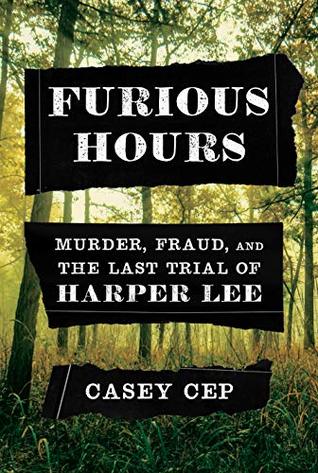
Furious_Hours_Cover

Memorial Day typically marks the unofficial start to summertime, though here in Nashville it seems we’ve had nonstop toasty weather since Easter. At any rate, I wanted to highlight three titles that have recently caught my fancy. Two of them are new nonfiction releases, while another–a novel–is actually a couple of years old but took a while for me to discover.

Furious Hours: Murder, Fraud, and the Last Trial of Harper Lee by Casey Cep

During the 1970s, To Kill a Mockingbird author Harper Lee devoted several years of research, writing, and editing to a convoluted real-life legal drama in her native Alabama. Given that the literary icon had served a key role in the legwork for her childhood pal Truman Capote’s true crime blockbuster In Cold Bloodit seemed like a natural fit for Lee to turn to the genre for her long-awaited sophomore book release.

Yet, the in-process title never made its way to the reading public. Cep offers a compelling biography of the notoriously publicity-shy Lee, who passed away in 2016 following the controversial publication of her long-hidden Mockingbird prequel/sequel Go Set a Watchman. She also tells the story that Lee had undertaken involving Reverend Willie Maxwell, a charismatic figure implicated in the deaths of as many as five family members in whose name he had taken out lucrative life insurance policies.

Though Maxwell had found a following as a Christian man of the cloth, rumors attributed his schemes to voodoo rituals. He managed to elude conviction thanks to legal representation provided by colorful defense lawyer Tom Radney. In an odd twist of fate, after a man named Robert Burns shot Maxwell to death at the funeral of his the Reverend’s stepdaughter, Radney filled the role of Burns’ attorney.

As someone fascinated by Lee and her talent, I wish that I could read her account of the people and events tied to the same landscapes that figured into her classic fictional tale. Yet, Cep’s narrative never fails to mesmerize in its own right.  I loved the evocative character depictions and edge-of-your-seat real-life storytelling.

Shortest Way Home: One Mayor’s Challenge and a Model for America’s Future by Pete Buttigieg

Okay, I confess to being a bit of a political nerd. Even though I wound up in the business world, my undergraduate major was political science, and I did graduate work in public administration. Add in the fact that I am an openly gay man with mostly center-left politics who is happily married and lives what could be described as as rather tranquil life of homosexual domesticity, and I guess it’s not too much of a shock that the memoir from South Bend, Indiana Mayor and 2020 Democratic presidential candidate Buttigieg held instant appeal for me.

I am a member of Generation X, while Buttigieg is a Millennial, so I must confess there is a little bit of a nagging contrarian voice inside me worrying that it would seem strange to have a national leader 15 years my junior. Yet, that bit of doubt pales in comparison to how impressed I am with “Mayor Pete’s” diverse set of credentials: Ivy League scholar, military veteran, proven leadership as an elected official in the Rust Belt region that the Democratic Party desperately needs to recapture to win back the White House.

Why would a small-city mayor bypass the usual route of first winning a statewide elected position before pursuing the Oval Office? Buttigieg’s narrative traces the unusual and unlikely circumstances of his rise to political prominence. In the aftermath of Trump’s 2016 victory, many observers speculated that the Democratic Party needed an infusion of youth and also someone who could bridge the growing gap between progressive/liberal activists and more traditional voters in America’s Heartland. So, Buttigieg’s mix of the traditional and the not-so traditional began to generate national attention.

Buttigieg provides an engaging conversational style as he continually shifts between the life of experiences in his formative years and his current political journey. His candid account of the long inner turmoil of suppressing his sexual orientation until his early thirties and then having to play catch-up in the realms of dating and relationships rang especially true for me.  Whether or not one agrees with Mayor Pete on the issues, the earnest and unassuming nature of his persona shines through.

Britt-Marie Was Here by Fredrik Backman

Swedish author Backman first gained international acclaim for his runaway bestseller A Man Called OveWhen I recently read his novel My Grandmother Asked Me to Tell You She’s Sorry, I managed to fall in love with an especially memorable supporting character named Britt-Marie; she fascinated me at every turn. So, I was delighted to find out that Britt-Marie was at the center of another Backman title.

Perhaps if sixtyish Britt-Marie had been part of a more contemporary generation, she would have been labeled as experiencing obsessive-compulsive disorder or maybe a gap in social skills tied to the high-functioning end of the autism spectrum. As a dedicated homemaker married to a workaholic financier named Kent, Britt-Marie channels her personality into keeping their apartment perfectly organized and the building’s resident association faithful to the fine points of every bylaw.

When Britt Marie learns of Kent’s flagrant adultery, she finds herself alone for the first time in her life. She lands an unlikely temporary position as the caretaker of the community recreation center in an economically-disadvantaged town on the verge of extinction. Having always viewed sports–and recreation in general–as a waste of time and attention, Britt-Marie must eat her words and become coach of the local youth soccer team.

On the surface, the plot may not seem like anything groundbreaking. It may even sound like a Lifetime or Hallmark Channel movie formula. Yet, what makes this book so amazing is the character development nicely matched with the distinct sense of place. I was mesmerized by the the charm and eccentricities on display in the humble village of lovable misfits. One of the most memorable relationships centers on Britt Marie’s odd bonding with the center’s resident rat, as a need for companionship trumps her longstanding reputation for household hygiene. As ridiculous as it sounds, somehow it all clicks for me when Backman ties things together.

The United Methodist Church’s LGBT Fracture and Wal-Mart’s Gay Shopping Date

Pride Flag with Male and Female Symbols

This week, I have taken a few vacation days to catch my breath and take care of some domestic matters. So, I have been able to ponder two media items related to the LGBT community. First, a special General Conference of the United Methodist Church narrowly adopted a conservative approach to issues of sexuality. Secondly, discount retailing giant Wal-Mart unveiled a new video advertisement on its Facebook feed featuring two gay men shopping at one of its Supercenters as part of a blind date. I know it seems like a huge apples to oranges stretch, but I can’t help tying these two media threads together in that pesky ADD brain of mine.

I have been a United Methodist my entire adult life. About the time I began my freshman year of college, the Southern Baptist denomination in which I was raised had swung from a pretty center-right brand of evangelical theology with a relatively big tent to a more rigid blend of religious and political fundamentalism. At the time, my coming to terms with being gay wasn’t destined to happen for another decade, but I possessed a keen sense that biblical literalism wasn’t for me. In particular, I strongly supported women in the ministry and the compatibility between Christianity and such scientific concepts as the theory of evolution.

I found my way pretty early on in this journey to the United Methodist Church, in large part, because of the supportive environment I found in my university’s excellent Methodist campus ministry. One of the foundational concepts of Methodism that appealed to me most strongly was the Wesleyan Quadrilateral. Okay, I never quite mastered correct pronunciation of that fancy ‘q’ word, but I loved the definition of faith shaped by “Scripture, tradition, reason, and experience.” I liked the idea that intra-Christian dialogue was more than just a Jeopardy Lightning Round Bible verse quote challenge.

As I accepted myself as a gay man who wished to remain a part of the Church, I found affirmation and assurance when I opened myself up to the growing number of supportive voices. I  have spent different periods of time actively involved in several wonderful United Methodist congregations that fell along the spectrum between the more bold left and the more live and let live center. I have been able to share my story in different ways in different settings.

I remain truly in awe of the many friends I have who have been on the front lines of LGBT issues in the United Methodist Church. I am grateful for their prophetic witness, particularly in the early years when I was either too young or not yet emotionally ready to come out of the closet. Such groups as the Reconciling Ministries Network and their allied organizations have fought the good fight over the past four decades.

Every four years, the United Methodist Church holds a General Conference of elected clergy and lay delegates to make decisions regarding church governance. Recurring battles have centered on issues of sexuality, in particular, whether to overturn existing bans on the ordination of homosexual clergy or allow same-sex weddings/commitment ceremonies in United Methodist Church buildings.

Over time, the vote tallies have gotten close, but the pro-LGBT side has always managed to come up a bit short. While there remains a vocal  and well-organized conservative contingency inside the United States, the most strident opposition has come from overseas conferences of the Church. I think it’s important to resist the temptation to make blanket statements that oversimplify things. Yes, there are allies in every corner of the world, but as a general trend, these regions are in a very different place both culturally and politically, and the split seems to be getting more pronounced with time.

The special 2019 off-year General Conference  was called to try to bring clarity and resolution to these matters and produce a “way forward” for the Church as a whole. The Council of Bishops put forth the middle-of-the-road One Church Plan as the recommended proposal for delegates. The One Church Plan was structured to place decisions about same-sex wedding ceremonies under the authority of local church pastors and decisions about LGBT ordination under the authority of the regional bodies known as Annual Conferences.

I am sure that some of the folks closer to the inside could offer nuance as far as the parliamentary procedures, but this gathering went against the wishes of the Bishops and instead adopted the Modified Traditional Plan, which doubles down on the existing prohibitions and seeks to make the Church’s divergent governing bodies more accountable for enforcement of those restrictions. (Approximately 2/3 of U.S. delegates supported the One Church Plan, not quite enough to make up for the opposition from elsewhere)

I feel deeply disappointed by this outcome, but I am grateful for the supportive messages I have received from my local church family this week. So, I guess I find myself wondering if the forces in support of inclusion and tolerance are not unlike Charlie Brown trying to counter Lucy’s football throws in Peanuts. We see ourselves getting closer, but the game keeps shifting, and it seems weighted toward the other side.

While, sadly, plenty of folks in our midst still face the pain of rejection for who they are and who they love,  I think that part of the current dynamic is that many in the LGBT community, including in the United Methodist Church, have made  quite a bit of progress in building relationships in our daily lives that have changed hearts and minds on hot-button questions. Usually, those interactions are built on shared connections, values, and cultural similarities. Take those away, and the change proves more of an uphill task.

I think that inviting someone from a completely different ethnic, cultural, or political situation to engage in discussion requires a special skill set. I hold a deep admiration for those who seek to spread a message of acceptance in parts of the world where such activity could get you arrested or killed. And even here in the United States, with all of the progress we have experienced, there are folks who have pure contempt and hatred for LGBT citizens and would do us harm if they could. Yet, because of all of the positive developments, many thriving, reasonably well-adjusted LGBT folks have carved out a life for ourselves tied to safe bubbles where we  do our best to avoid the loudest naysayers.

I am not saying that’s an inherently bad or good thing. It is what it is. It can seem like the best of times or the worst of times, depending on your particular circumstances. There are battles out there, but not all of us are on the front lines. If we aren’t, my hope is that we can still make a difference even if just by living our day-to-day lives with truth and integrity, refusing to be ashamed.

Which leads me, finally, to the Wal-Mart video. While the chain is now a ubiquitous phenomenon, its origins can be found in America’s rural South and heartland. Those of us from the Bible Belt got to know Wal-Mart before it operated from coast to coast and even across the globe. So, the chain has more socially conservative roots than its closest competitors. Yet, over the years, Wal-Mart has still become increasingly responsive to the LGBT consumer segment.

The advertisement in question features two clean-cut young men meeting for a blind shopping date. They dress far from provocatively and discuss such innocuous topics as shampoo-conditioner combinations, the joys of Little Debbie Oatmeal Cream Pies, and whether iron or aluminum cookware should be a new cook’s first purchase. Of course, that doesn’t stop a couple of pro-family groups from threatening boycotts due to the flagrant “gay agenda” at work.

However, unlike with other social and political institutions, I would venture to predict, with almost 100% certainty, that the angry mobs will get absolutely nowhere in their efforts. As with Target, Home Depot, Starbucks, and scores of other examples over the years–the most powerful forces in corporate America have come to understand that LGBT households are a force to be reckoned with. Okay, maybe not with a particular chicken sandwich restaurant and one individual arts and crafts chain, but those are definitely exceptions to the rule. Hating on gays gets you pretty much nowhere in a dialogue with contemporary consumer commerce giants.

So, maybe if you want to see the most reliable and unapologetic markers of social change, look to the shampoo and conditioner aisle. The political and religious stuff is more of a long game, I am afraid.