
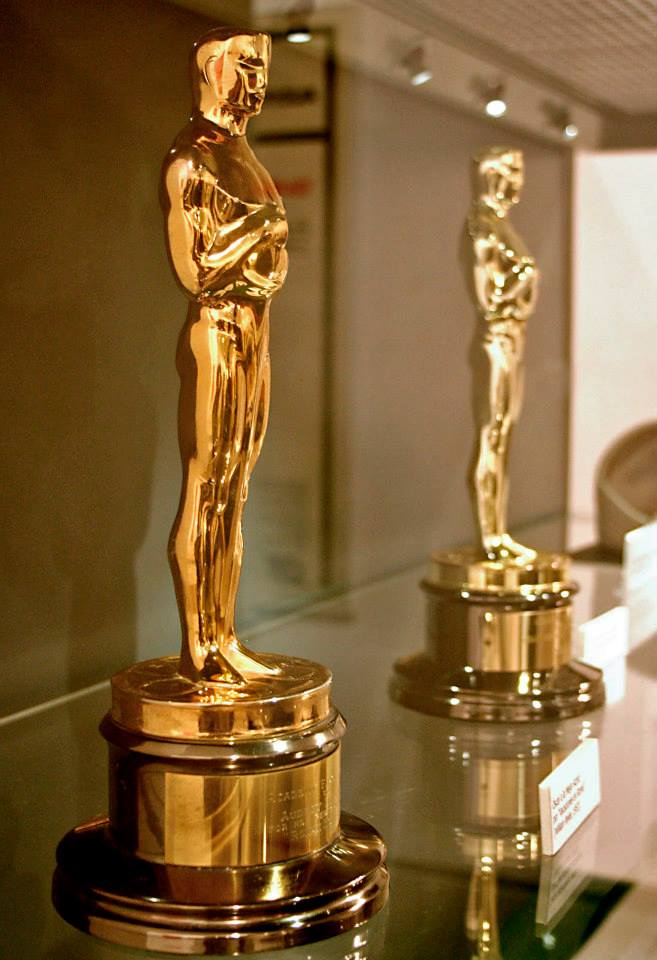
Sunday March 6th will mark the 90th Academy Awards. I have always been a movie buff. I go to the movies less than when I was younger, but that’s because I have grown increasingly less patient with standard blockbuster fare; been there done that. Yet, when it comes to movies with an artistic bent, the kind that generally receive awards attention, I still make a point to stay engaged.
Yet, I will leave it to others to dissect this year’s field. A few years back, the number of best picture nominees was expanded to broaden public interest, but honestly I think this makes the dynamics more fragmented. So, instead I want to travel back in time two decades to the 70th Academy Awards in 1998, which honored films released in 1997.
At that time, I had recently relocated to Nashville during a time of transition at the age of 30. Maybe I can recount all the details in a future blog post, but I was working book retail, making barely enough money to pay my rent. I was just now out as a gay man and trying to make up for lost time as far as dating and such.
I didn’t have much in the way of disposable income, but I could manage to make it to bargain matinees on my days off. Working in the media retail setting, I was hyper-aware of the various book-movie connections. This was the early days of the Internet, long before social media.
My two employers during this timeframe were Books-A-Million (still around) and Media Play (long gone). When I think about the latter, it seems like a distant lost civilization: physical CD’s and DVD’s (even VHS tapes too) mixed with books, all merchandised in a physical environment for maximum foot-traffic energy. I remember one night a regular customer mentioned a then obscure site called Amazon.com. It was going to change everything, and that prediction turned out not to be hyperbole.
The Titanic Phenomenon
I have to confess that I did not drink the Kool-Aid when it came to the James Cameron blockbuster Titanic, which earned 14 Oscar nominations that year, winning 11 of them including Best Picture. I love Leo and Kate in pretty much anything, and it’s not like it’s a bad movie. Yet, it seemed just a bit too focused on dazzling special effects at the expense of other cinematic ideals, in my view at least.
Maybe some of my sentiments were shaped by my hearing the theme song over and over and having had to deal with the crazy demand for the special commemorative coffee table book that kept flying off the shelves. (Of course, a year or two later it would find its way to the bargain tables, but that’s not an unusual trajectory.) I do think that the film reached an interesting milestone in movie marketing, a special-effects blockbuster that was targeted more to female than male teens. That was kind of interesting to see in the retail setting.
Okay, so Titanic was not really my scene, but it turns out that 1997 was still an incredible movie year. The also-rans in the Best Picture race hold up rather nicely in mind (a couple of them in particular).
Good Will Hunting
Maybe Matt Damon and Ben Afleck put my newly liberated gay self in a magic trance or something, but Good Will Hunting became and remains my all-time favorite film. Director Gus Van Sant created an indie film vibe that was serious and artsy with just the right light touches to provide mainstream appeal. The flick received 11 nominations, with Damon and Afleck taking home the Original Screenplay prize, and the late-great Robin Williams capturing the Best Supporting Actor award for his role as a kindly psychologist coming to terms with wounds of his own.
Why did this film mesmerize me to such a degree? Well, I know things like this are purely subjective. The Boston street locations were minimalist but somehow rendered brilliantly with the blend of cinematography and editing. (Years later, it was a treat to visit the Boston area in real life.) Yet, ultimately, I guess the lead character of Will Hunting and his equal parts of genius, bravado, rebellion, and heartache really came to life for me. As an added bonus, the film makes a strong case for the benefits of mental health treatment.
As Good As It Gets
Speaking of mental health issues, Jack Nicholson’s turn as a grouchy author afflicted with severe obsessive-compulsive disorder holds up quite nicely. Directed by comedy/drama master James L. Brooks, As Good As It Gets was nominated in seven categories and took home the lead-actor statues for both Nicholson and Helen Hunt.
The story provides an excellent case study of flawed people finding love and acceptance. While the abovementioned Robin Williams certainly deserved his supporting actor win for Good Will Hunting, I think that Greg Kinear provided a worthy competitor for his nominated performance as a gay neighbor thrown into a complicated drama with Nicholson’s homophobic character. The idea of deplorable people redeeming themselves through noble acts remains a topic worth exploring.
L.A. Confidential
Writer-director Curtis Hanson’s L.A Confidential featured an all-star cast of late ’90s stars and stars in the making in a stylish and sophisticated tribute to old-fashioned film-noir in the tradition of Chinatown. L.A. Confidential received nine nominations and won for its adapted screenplay and for supporting actress Kim Basinger. Like the abovementioned Hunt, I think that Basinger often seems to practice her craft in a more nuanced and understated fashion, but when things click, they click.
Hanson, who passed away recently following a battle with dementia, left a solid body of work. He also directed one of my all-time favorite psychological thrillers The Hand that Rocks the Cradle. I hope that film audiences don’t forget about him in the years to come.
The Full Monty
Admittedly, The Full Monty finding its way to the pack of five Best Picture nominees may seem a bit of a stretch. Yet, the little British gem, which captured a win for its whimsical score, showcased some of the matters that–in my humble opinion–the English seem to tackle with greater ease in their films. Sexuality among a group of laid-off factory workers turned male strippers was democraticized in a way where bodies need not be perfect. Also, the realities of class were handled with refreshing honesty and insight.
I know that physical video rental stores are pretty much an extinct relic nowdays, though my other half and I did stumble upon one in a hispster urban neighborhood of Atlanta in our travels this past fall. Yet, whether from your local public library or Netflix disks via the mail or an Internet streaming service, I urge those of you who missed this era to play cinematic catch-up.
 Coloring Outside the Lines